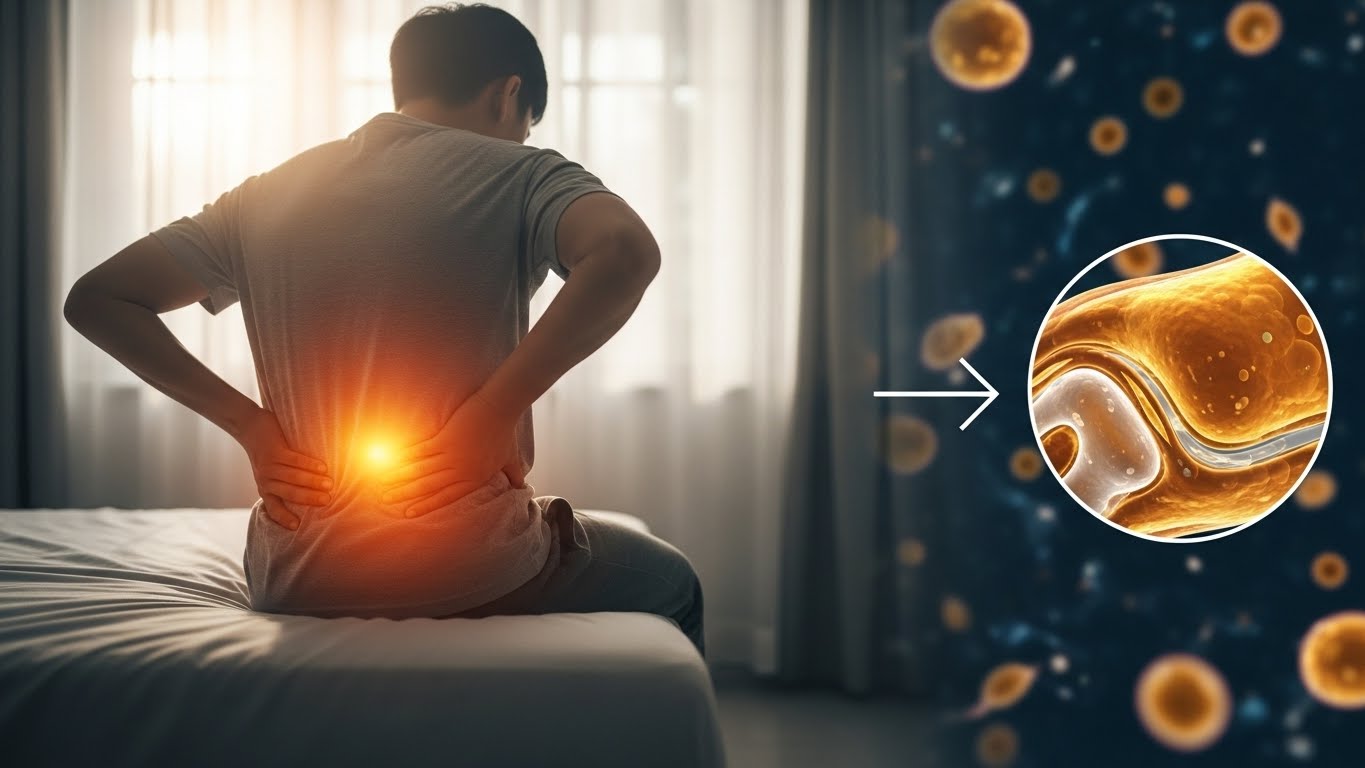
Feel like a “rusted hinge” in the morning? It’s usually lubrication + temperature + stillness—not “damage overnight.”
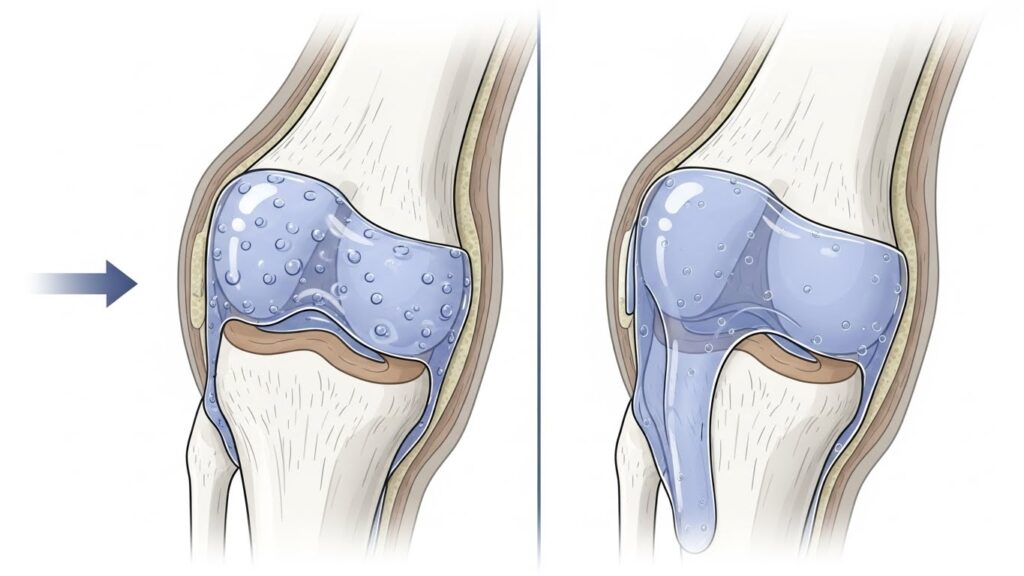
After hours of not moving, joints and soft tissues can behave like cold gel: stiff at first, smoother once you “stir” them. That creaky, resistant feeling is often linked to synovial fluid thixotropy (fluid that flows better after gentle motion), plus overnight cooling and lower circulation.
The fastest safe reset is usually 2–4 minutes of tiny, low-effort movement before you bend, rush, or sit hard.
🚩 Red flags (don’t “push through”)
- Fever, unexplained chills, or a hot/red swollen joint
- New numbness/weakness, trouble walking, or pain after a fall/accident
- Bowel/bladder changes or groin numbness
- Morning stiffness with major swelling that lasts over an hour most days
- Pain that is rapidly worsening or waking you nightly
If any apply, get medical guidance. This page is educational, not a diagnosis.
Last Updated: January 16, 2026 | Editorial Review: BodyEase Lab (movement + pain patterns) | Scope: Non-medical, evidence-informed self-checks
I used to wake up feeling oddly “stuck,” like my back and hips needed a few minutes to unlock. The weird part? It wasn’t always sharp pain—more like resistance. And if I tried to bend right away (socks, sink, picking something up), I’d get that instant “nope” signal from my body.
What finally helped was treating the first few minutes of the day like a warm-up for your joints, not a willpower test. Once I understood the “gel effect,” I stopped guessing—and stopped making mornings harder than they had to be.
Personal tip I didn’t expect to matter: on colder mornings, I felt dramatically stiffer if my first step was barefoot on a cold floor—so I kept slip-on slippers by the bed and did my first 60 seconds of tiny walking before any bending.
What “synovial fluid thixotropy” means in plain English
Inside many joints (knees, hips, and even small joints in the spine), there’s a slippery lubricant called synovial fluid. One of its useful quirks is that it can behave a bit like gel when still, then move more freely after motion. That “gel-then-glide” behavior is often described as thixotropy.
Here’s the simple version: stillness + cooler tissue + less circulation can make the first movements feel sticky or guarded. When you start moving, you’re doing three things at once: you re-mix lubrication, warm the area a little, and send your nervous system a clear message— “this is safe; release the brakes.”
Practical takeaway: if your stiffness consistently eases after a few minutes of easy movement, that “pattern” often fits a warm-up/lubrication issue more than a sudden new injury.

Why it feels worse right after waking (even if you slept “fine”)
- Stillness: You haven’t moved for hours. Joints and fascia haven’t been “stirred.”
- Cooling: Body surface temperature drops a bit during sleep; cooler tissue can feel stiffer.
- Compression patterns: Sleep positions can load the same area the same way for a long time.
- Nervous system guarding: Your brain may keep muscles slightly “on standby” until movement feels predictable.
Quick self-check:
If you feel noticeably better after 2–10 minutes of gentle movement, that “improves with motion” pattern often points to a warm-up/guarding effect rather than an “injury happening right now.”
The 4-minute “hinge unlock” protocol (gentle, low-risk)
This isn’t a workout. It’s a lubrication + temperature + nervous-system reset. The goal is to reduce that sticky resistance before you ask your spine and hips to do harder tasks (bending, lifting, sitting long).
Step 1 (60 seconds): Micro-move before you stand tall
- Still in bed, do ankle pumps for 20 seconds (a quick circulation “wake-up”).
- Gently tighten–relax your glutes 5 times (no strain, just a signal).
- Do a tiny knee-to-knee sway (small range) for 20 seconds.
Step 2 (90 seconds): “Oil the hinges” with tiny-range motion
- Stand next to the bed and take 3 slow breaths, letting shoulders drop.
- Do 5 mini hip-hinges (10–15% bend). Stop before discomfort.
- Do 5 gentle pelvic tilts (front/back) without forcing range.
Step 3 (60 seconds): Warmth cue (optional but powerful)
If you run cold in the morning, try 30–60 seconds of warm water on your low back/hips in the shower, or a warm towel. The goal is comfort and ease—not “deep heat.”
Step 4 (30–60 seconds): One safe movement test
Pick one daily trigger (socks, sink, picking up a bag). Do a half-range rehearsal first. If it feels smoother after the protocol, that’s useful feedback: your body needed a calm startup sequence.
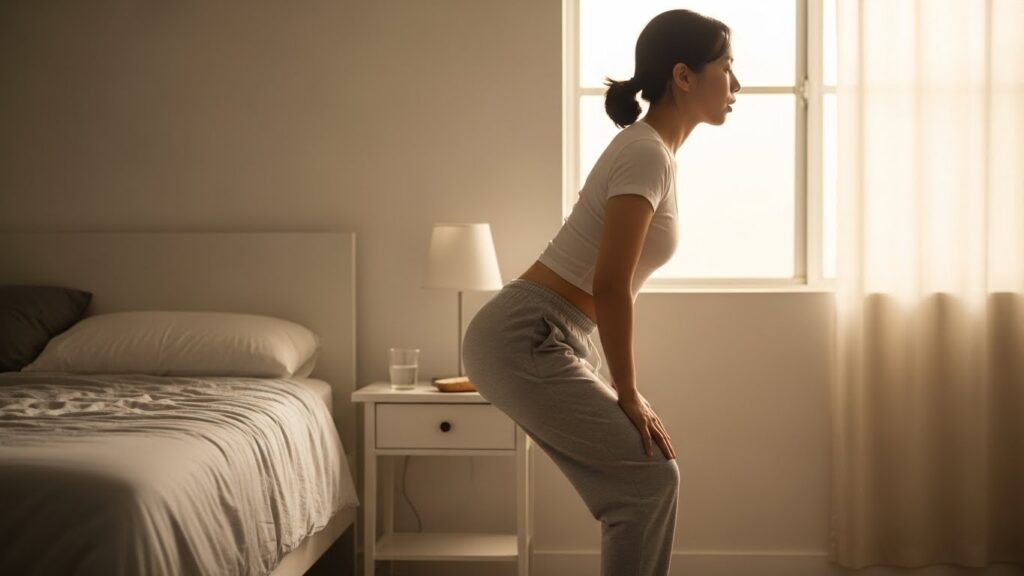
“Rusted hinge” pattern map: what it usually means
| What you notice | Common driver | Try this first |
|---|---|---|
| Stiff for 2–10 min, then better | Gel effect + guarding | 4-minute unlock protocol |
| Worse after long stillness (sleeping in, naps) | Immobility pattern + temperature drop | Short walk + warmth cue |
| Sharp pain with bend right away | Morning load sensitivity | Half-range rehearsal, avoid full bend first 10 min |
| Stiff + swollen + lasts > 60 min | Possible inflammatory pattern | Get medical guidance (don’t self-treat blindly) |
This table is pattern-based guidance, not diagnosis. Use it to decide what’s reasonable to try—and when to get help.
Common mistakes that keep you stiff
- Going straight to a deep stretch: if tissues feel “cold-gel,” aggressive stretching can backfire.
- Bending fully right away: socks + sink bends are a classic morning trap. Do half-range first.
- Rushing into sitting: hard sitting can spike pressure before your body is ready.
- Ignoring sleep setup: the same loaded position for hours can create the same stiff spot every morning.
Pro tip:
If you only change one thing, change the first 3 minutes after waking. You’re not “fixing” your entire back—you’re preventing the morning startup spike that makes everything feel harder.
FAQ
Is this arthritis?
Sometimes stiffness is a harmless “warm-up needed” pattern. But if you have swelling, heat/redness, fever, or stiffness lasting over an hour most mornings, it’s worth getting checked.
Why do I feel better after walking?
Walking is low-risk motion that increases circulation, gently loads joints, and helps your nervous system stop guarding.
Should I stretch first thing?
If stretching helps and doesn’t flare you, fine—keep it gentle. But many people do better with micro-moves first, then stretching after they feel warmer.
How long should the “unlock” take?
Many people notice a shift in 2–10 minutes. If you’re consistently worse day after day, or worsening quickly, get guidance.
What if my stiffness is only in one spot?
That can happen with a repeating sleep load (same side, same twist). Try a small sleep setup change and compare for 7 nights.
Related BodyEase Lab posts
If this topic hits home, these are the closest “next reads” in the same morning-pain cluster:
Why morning stiffness improves after moving
Bending over in the morning hurts (why it feels so bad after sleep)
Slept 8 hours, still stiff (why “enough sleep” can still feel tight)
Sleep position and morning stiffness
Why heat can help morning back pain feel better fast
Sources
- MedlinePlus (NIH): Joint disorders overview
- NHS: Arthritis overview and symptom patterns
- PubMed: Synovial fluid properties and thixotropy research (search portal)
Professional disclaimer
This article is for educational purposes and does not provide medical diagnosis or treatment. If you have red flags (fever, significant swelling, new weakness/numbness, bowel/bladder changes, severe or worsening pain), seek professional care.
Update log
2026-01-16: Published initial version. Added 4-minute protocol, pattern map table, and red-flag screening box.

Hi, I’m Chris
I’m not a doctor or a physio. I’m just a guy who spent 5 years battling crippling morning back pain while sitting at a desk job.
Traditional advice didn’t work for me, so I became obsessed with researching the science of recovery. This blog contains the practical, tested routines that finally helped me wake up pain-free.