Last Updated: December 31, 2025 | Editorial Review: WorkNest Studio (Evidence-checked) | Note: Informational only (not medical advice)
Disclaimer: This article shares general education and personal-style observations. It does not diagnose, treat, or replace professional medical care. If symptoms are severe, persistent, or worsening, consider medical evaluation.
Quick Standard (stretching myth check)
- If stretching right after waking up consistently feels worse, don’t force it.
- Early mornings often favor gentle movement before deeper stretches.
- The goal is reduce strain first — flexibility can come later.
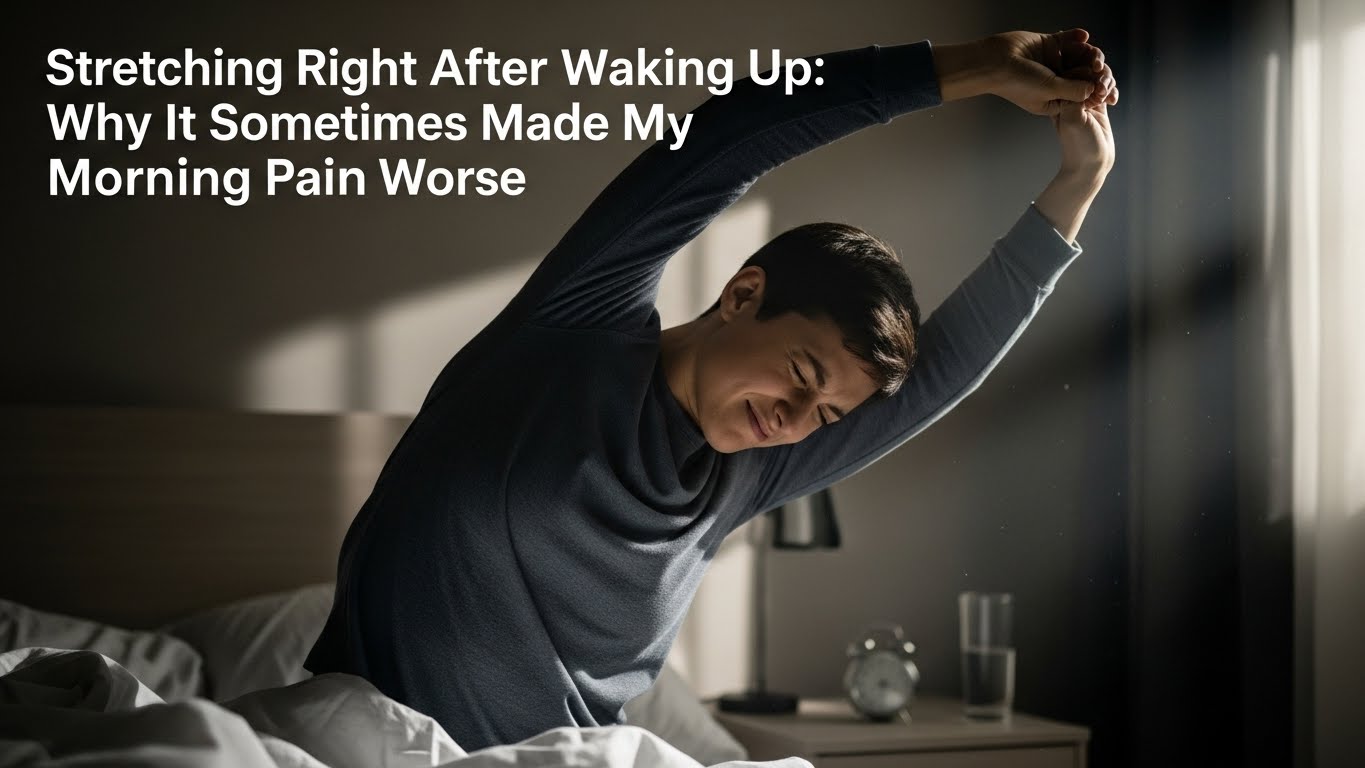
stretching right after waking up sounded like the healthiest habit. So I tried it—every morning. The problem? Some days it helped, but other days it made my back feel sharper and more irritated. That inconsistency is what made me look closer at the timing: it wasn’t “stretching is bad.” It was more like… stretching too early sometimes didn’t match how my body felt right after sleep.
Below is the simple “why,” what felt better than forcing flexibility at 7 AM, and the small timing change that made mornings feel more predictable.
💡 Quick Summary
Stretching right after waking up can feel uncomfortable because your body is transitioning from hours of stillness. For many people, light movement first (walking, posture changes, gentle range) feels easier than deep or aggressive stretching. If stretching feels worse early, try changing the order: move first, stretch later.
⚠️ When morning pain needs urgent medical attention
- New bladder/bowel control changes
- Numbness around the groin/saddle area
- Rapidly worsening leg weakness, severe numbness, or major coordination issues
These can be red-flag symptoms. If you’re unsure, treat it as urgent and seek medical care.
Why stretching right after waking up can feel harder
Morning discomfort is often a timing issue more than a “strength” issue. Your body isn’t in the same state as it is later in the day — and that can change how stretching feels.
1) Your body is still “warming up” from immobility
After hours of stillness, many people feel guarded or stiff. Deep stretches can feel too intense if they’re your first big movement of the day. A short transition (standing, slow walking, gentle range) often makes the next movements feel smoother.
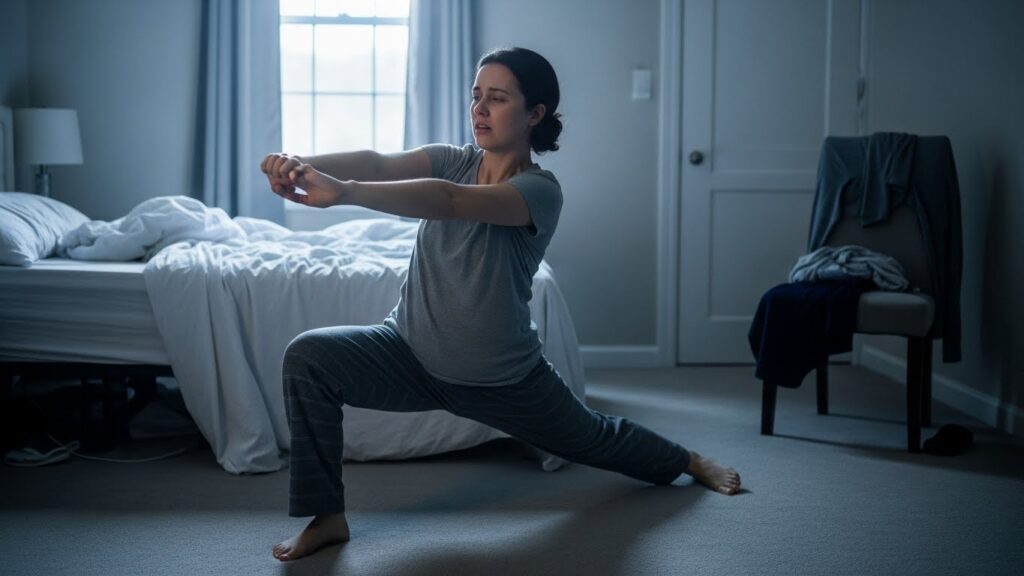
2) Stretching often sneaks in the first deep bend
A lot of “morning stretches” involve forward flexion (toe-touch vibe). If your first meaningful bend happens before you’ve moved at all, it can feel sharper than you expected — even if the exact same stretch feels fine later.
3) Some “morning mechanics” are time-linked
Research on diurnal spinal mechanics discusses how spinal loading/disc behavior can vary across the day. That doesn’t mean something is broken — it just supports the idea that timing can matter for some people.
What worked better than stretching first thing
I didn’t stop moving in the morning — I changed the order. The goal was to make the first 10 minutes boring and predictable.
| Instead of | I did | Why it felt better |
|---|---|---|
| Deep stretches immediately | Log-roll + short walk | Reduced the “shock” of the first big movement |
| Forward bends as the first move | Neutral posture changes | Gentler loading before bending |
| Forcing range “because I should” | Waiting ~10 minutes | Body felt more ready; less irritation |
When stretching actually felt helpful
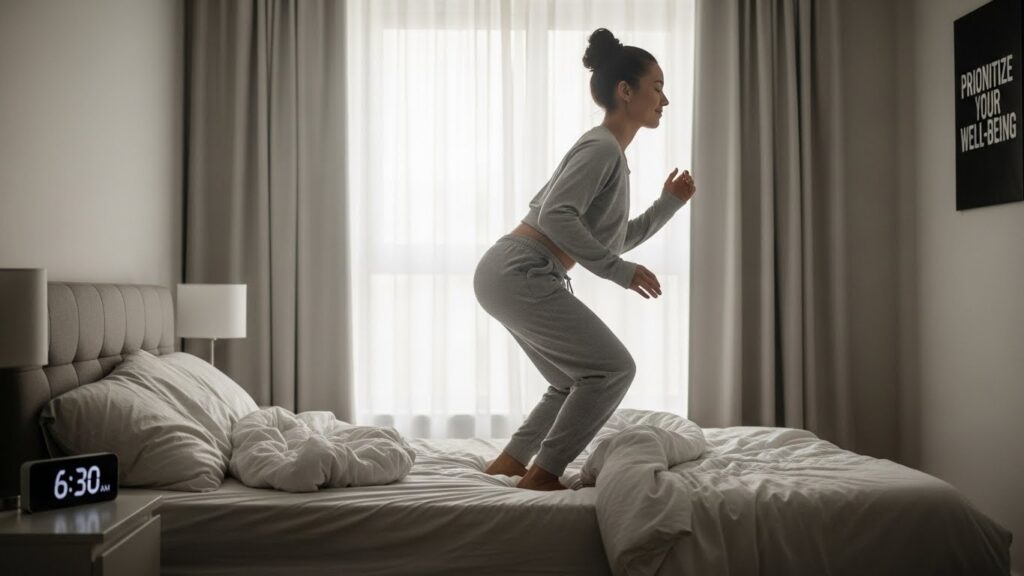
- After 10–15 minutes of light activity
- Later in the morning or mid-day
- When tissues felt warm and not guarded
The big takeaway for me: timing mattered more than the stretch itself.

FAQ
Is stretching right after waking up bad?
Not always. Some people feel fine. But if it consistently feels worse, changing the order (move first, stretch later) may help.
Should I avoid stretching completely?
No. Many people benefit from stretching — just often more comfortably once the body is warmed up.
What’s a safer first move?
Light walking, posture changes, and neutral movements are often easier early on than deep forward-bend stretches.
Internal Links
Morning Back Pain Routine: Why I Stopped Rushing and Fixed My Stiffness
Back Hurts After Waking Up: Why Pain Peaks Right After Getting Out of Bed
Sleeping In Makes Back Pain Worse: Why Longer Sleep Felt Harder
Sources (checked)
- PubMed: Diurnal changes in spinal mechanics (time-linked spinal behavior)
- PubMed: Temperature change and stretching-related flexibility / stiffness measures
- Mayo Clinic: Stretching basics (timing, technique, and safer approach)
- Sleep Foundation: Waking up with lower back pain (causes & practical tips)
- NHS Trust: Cauda Equina Syndrome (urgent red-flag symptoms)
Professional Disclaimer: This content is for education and general guidance only. It does not provide medical diagnosis or individualized treatment. If pain persists, worsens, or is accompanied by neurological symptoms, consult a licensed healthcare professional.
Update Log:
– Dec 31, 2025: Replaced mismatched PubMed link + softened medical certainty + verified external sources + refined red-flag section.

Hi, I’m Chris
I’m not a doctor or a physio. I’m just a guy who spent 5 years battling crippling morning back pain while sitting at a desk job.
Traditional advice didn’t work for me, so I became obsessed with researching the science of recovery. This blog contains the practical, tested routines that finally helped me wake up pain-free.