Last Updated: January 9, 2026 | Editorial Review: BodyEase Lab (Evidence-checked) | Note: Informational only (not medical advice)
Disclaimer: Educational content only. Not medical advice. If stiffness is severe, progressively worsening, lasts unusually long, or comes with numbness/weakness, seek medical evaluation.
Quick Reality Check (read this first)
- If you slept 8 hours still stiff, sleep length may not be the problem.
- Your body can wake up “recovered” but still feel mechanically tight after long stillness.
- The fastest win is usually how you transition out of sleep, not forcing more sleep.
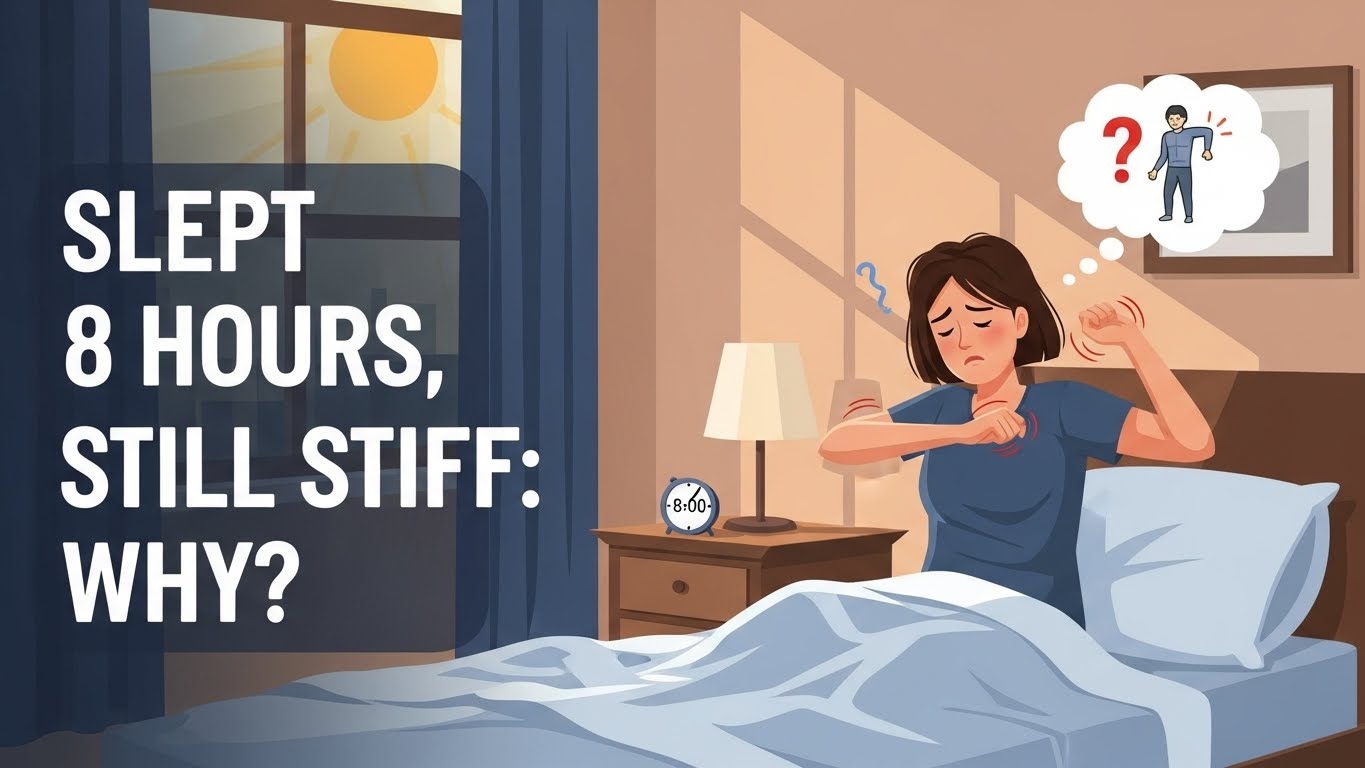
slept 8 hours still stiff was the phrase I kept repeating because it felt unfair. I did the “good sleep” checklist… and still woke up tight. That’s when I realized something: sleep restores a lot, but it also locks you into stillness for hours.
So this isn’t a “you slept wrong” lecture. It’s a simple explanation of the mechanical morning—and a short protocol that makes the first 10–15 minutes feel less brutal.
💡 Quick Summary
If you slept 8 hours still stiff, the usual culprits are prolonged immobility, sleep posture, and a slow “warm-up” window after waking. Overnight, spinal tissues and joints can behave differently. A short transition routine (standing + micro-walking + gentle circulation) often helps more than stretching hard or sleeping longer.
Why a full night’s sleep can still feel stiff
Sleep is fantastic for your brain and overall recovery. But from a movement perspective, it’s also the longest still period in your day. If your body prefers frequent position changes, 7–9 hours of stillness can show up as stiffness the moment you try to move.
1) Long stillness changes “tissue readiness”
After hours of low movement, tissues can feel less compliant at first. That doesn’t automatically mean damage—it often means you need a gradual ramp-up before deeper bending, twisting, or sudden sitting.
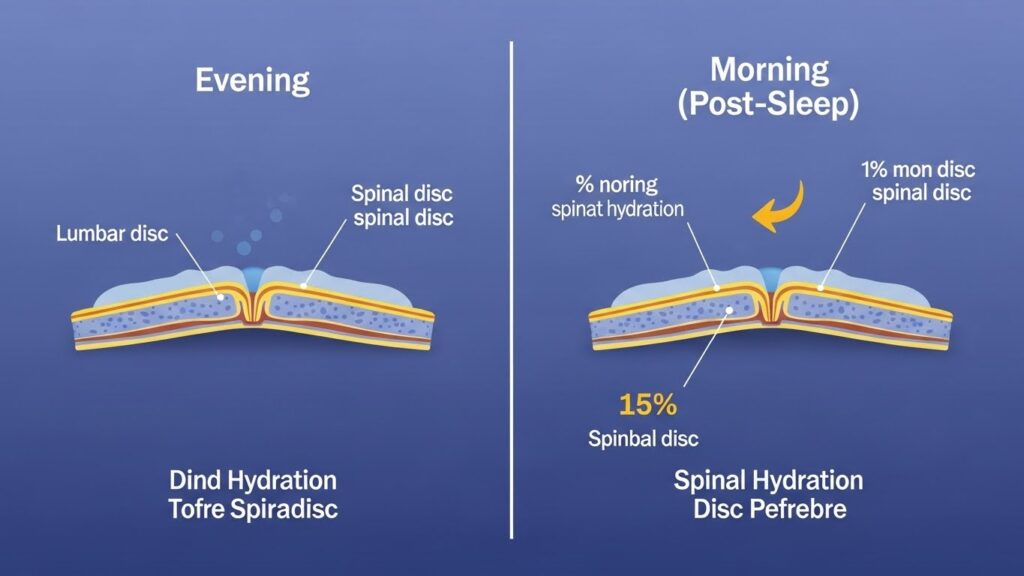
2) Overnight spine mechanics can shift
Your spinal discs and supporting structures can behave differently after rest. Early movement may feel “locked” because the system is transitioning from unloaded (lying down) to loaded (gravity + posture) mode.
3) Posture can “mold” stiffness
If you spend hours curled, twisted, or unsupported, you can wake up feeling like you slept in a shape. Even with 8 perfect hours, the position itself can be the hidden trigger.
One-line evidence anchor: Research on diurnal spinal mechanics suggests disc behavior and ligament “creep” under sustained loading can influence how the spine tolerates movement at different times of day.

The biomechanical paradox: recovery vs. rigidity
This is the part most people miss: systemic recovery (sleep, hormones, nervous system) and mechanical readiness (movement tolerance) are not the same thing. You can wake up mentally refreshed… while your body still needs a short “unfolding” phase.
- Stillness Tax: The longer you stay in one posture, the more your first movements feel sticky.
- Transition Load: The first sit, first bend, and first twist often feel worst because they spike load quickly.
- Timing & Temperature: Cold air + stillness tends to make morning tightness feel louder.
The 5-minute “Vascular Jumpstart” (no hero stretching)
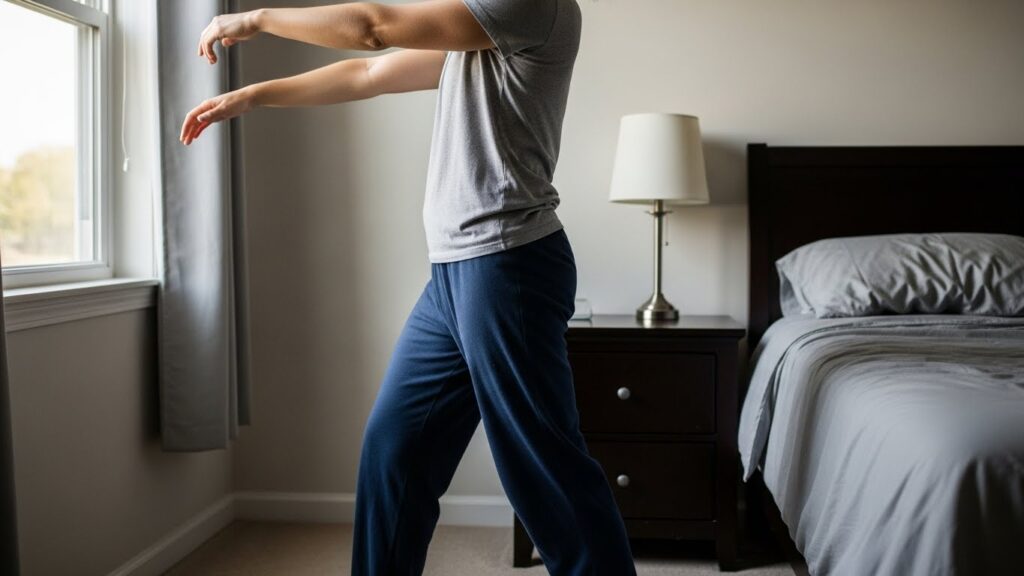
If you slept 8 hours still stiff, don’t start with a deep stretch test. Start with blood flow + gentle loading. Think: “wake up the system,” not “fix everything immediately.”
| Minute | What to do | Why it helps |
|---|---|---|
| 0–1 | Stand up slowly + 3–5 deep breaths | Transitions you into gravity without sudden bending |
| 1–3 | Micro-walk (easy laps at home) | Warms tissues + reduces static “stuck” feeling |
| 3–5 | Light upright tasks (water, bathroom, coffee) + short pauses | Lets your body adapt before long sitting or deep stretching |
After this, sitting usually feels easier. If it still feels rough, shorten sitting bouts and use gentle support (small towel roll behind the low back).
Sleep setup tweaks that reduce morning tightness
1) Support your default position (don’t fight it)
- Side sleepers: pillow between knees (reduces pelvic twist)
- Back sleepers: small pillow under knees (reduces back over-arching)
- Stomach sleepers: consider transitioning away slowly (often increases twist/extension)
2) Reduce “one-shape sleep”
If you always wake up stiff in the same spots, try a tiny change: a slightly different pillow height, a firmer surface under the hips, or a body pillow so you stop collapsing into a twist.
3) Warmth matters more than people admit
If your room is cold, your tissues may feel less elastic first thing. Even a quick warm shower or warm clothing can make the morning ramp-up smoother.
When stiffness isn’t “normal”
Most morning stiffness improves as you move. But consider professional evaluation if you notice:
- Stiffness lasting unusually long (especially if it’s getting worse over weeks)
- Swelling, warmth, or persistent joint redness
- Numbness, weakness, or radiating pain that changes function
- Red flag symptoms like saddle numbness or bowel/bladder changes (urgent)
FAQ
Does this mean I should sleep less than 8 hours?
Not necessarily. Many adults still do best with 7–9 hours. The better lever is often the morning transition + sleep posture, not cutting sleep.
Why do I sometimes feel better after less sleep?
Some people simply spend less time locked into one posture. But if you’re tired during the day, don’t trade sleep for “less stiffness.” Fix the transition first.
Should I stretch immediately?
If you slept 8 hours still stiff, start with gentle movement first. Deep stretching can feel good later, but it’s not always the safest first move.
What’s the simplest thing to try tomorrow?
Stand up, micro-walk 2–5 minutes, then sit. Don’t sit first and “test” stiffness with deep bends.
Internal Links
Back Hurts After Waking Up: Why Pain Peaks Right After Getting Out of Bed
Bending Over in the Morning: Why It Hurts After Sleep
Sources (checked)
PubMed: Diurnal changes in spinal mechanics and their clinical significance
Cleveland Clinic: What causes stiff joints in the morning?
Cleveland Clinic: Adjustments to help with waking up stiff
Sleep Foundation: How sleep works
Professional Disclaimer: Educational content only. Not medical advice. If symptoms are severe, persistent, worsening, or include neurological changes, seek licensed medical care.
Update Log:
– Jan 09, 2026: Merged “sleep length vs. mechanical readiness” + added 5-minute transition protocol + refined sources.

Hi, I’m Chris
I’m not a doctor or a physio. I’m just a guy who spent 5 years battling crippling morning back pain while sitting at a desk job.
Traditional advice didn’t work for me, so I became obsessed with researching the science of recovery. This blog contains the practical, tested routines that finally helped me wake up pain-free.