
Last Updated: December 30, 2025 | Editorial Review: WorkNest Studio (Evidence-checked) | Note: Informational only (not medical advice)
Disclaimer: This article shares general education and personal-style observations. It does not diagnose, treat, or replace professional medical care. If symptoms are severe, persistent, new, or worsening, consider medical evaluation.
Quick Standard (weekend reality check)
- If sleeping in makes back pain worse for you, more hours may not be the fix.
- Longer immobility can mean stiffer tissues when you finally move.
- The goal is often consistent wake-up timing + gradual morning movement (before the first deep bend).
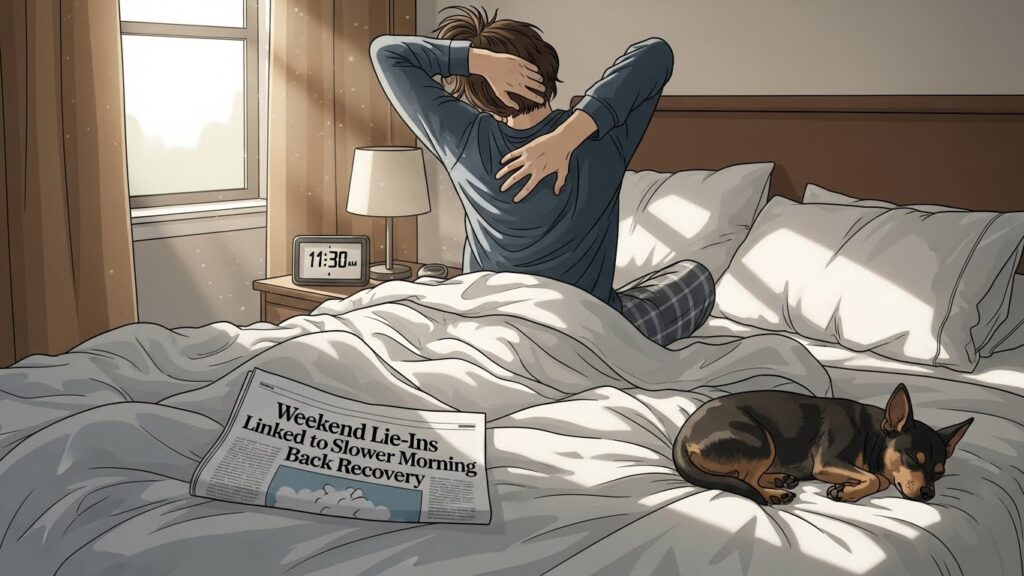
sleeping in makes back pain worse was not something I expected. I assumed extra rest would help. Instead, some of my roughest mornings showed up after long weekend sleep-ins. At night I felt fine—but once I finally got up, my back felt heavier, slower, and more sensitive than usual. I’ve been there, and it made me rethink what “rest” actually means for the first 10 minutes of the day.
This article breaks down why longer sleep can sometimes backfire, how extended immobility changes the morning transition, and what worked better than trying to “catch up” by staying in bed longer.
💡 Quick Summary
When sleeping in makes back pain worse, the issue is often prolonged immobility. Staying still longer can increase morning stiffness and make the first movements feel heavier. A steadier wake-up time, light movement, and a gentle transition often feel better than extra hours in bed.
⚠️ When morning back pain isn’t “just stiffness”
- New bladder or bowel control changes
- New numbness in the groin or saddle area
- Rapidly worsening leg weakness or severe radiating pain
These symptoms can require urgent medical attention. Don’t self-manage through them—get medical help.
Why sleeping in can make mornings feel worse
The problem usually isn’t sleep itself—it’s what happens when your body stays inactive for too long and then suddenly has to handle daily movement.
1) Longer immobility can mean stiffer tissues
Soft tissues respond to movement. When you stay still for extended hours, things may feel less responsive when you finally move. That first stand, first bend, or first “real-life reach” can feel sharper simply because everything was “offline” longer.
2) The morning transition gets delayed (not removed)
Most people have a natural “warm-up window” after waking. When you sleep in, that transition doesn’t disappear—it just happens later, sometimes right when you’re rushing to start the day.
3) Weekend habits often stack stress
Sleeping in often comes with sudden changes: different wake times, immediate chores, or long sitting. That stack can amplify morning discomfort—even if nothing is “wrong” structurally.

What I noticed after weekends vs weekdays
- Weekdays: Earlier wake-up, quicker warm-up, discomfort faded sooner.
- Weekends: Later wake-up, stiffer first movements, slower “settling in.”
- The trigger moment: the first deep bend after getting out of bed (socks, sink, laundry basket).
The pattern was mostly about timing—not dramatic mattress changes, not workouts. That was the clue that made everything feel less random.
What worked better than sleeping in
| Instead of… | I tried… | Why it helped |
|---|---|---|
| Sleeping 2–3 hours longer | Waking within ~60 minutes of my usual time | Kept morning rhythm predictable |
| Lying in bed scrolling | Light walking first (2–5 minutes) | Reduced stiffness before bending |
| Immediate chores | A 5–10 minute transition window | Lowered early load on the back |
FAQ
Is sleeping in always bad for back pain?
No. Some people feel fine. But if sleeping in makes back pain worse for you, the issue may be extended immobility rather than sleep itself.
Should I force myself to wake early on weekends?
Not force—aim for consistency. Staying within about an hour of your usual wake time often feels better.
Does this mean I’m not recovering properly?
Not necessarily. It often means your body prefers predictable transitions and a gentler ramp-up.
Internal Links
Morning Back Pain Routine: Why I Stopped Rushing and Fixed My Stiffness
Back Hurts After Waking Up: Why Pain Peaks Right After Getting Out of Bed
Stiff Back in the Morning: Why I Felt Fine at Night but Tight After Sleep
Sources (checked)
- Cleveland Clinic: Why back pain can be worse in the morning
- Sleep Foundation: Why lower back pain can show up after sleeping
- PubMed: Diurnal changes in spinal mechanics and clinical significance
- NHS: Cauda Equina Syndrome (warning signs)
Professional Disclaimer: This content is for education and general guidance only. It does not provide medical diagnosis or individualized treatment. If pain persists, worsens, or interferes with daily activities, consider consulting a licensed healthcare professional.
Update Log:
– Dec 28, 2025: Added weekend pattern analysis + consistency table + verified sources.

Hi, I’m Chris
I’m not a doctor or a physio. I’m just a guy who spent 5 years battling crippling morning back pain while sitting at a desk job.
Traditional advice didn’t work for me, so I became obsessed with researching the science of recovery. This blog contains the practical, tested routines that finally helped me wake up pain-free.