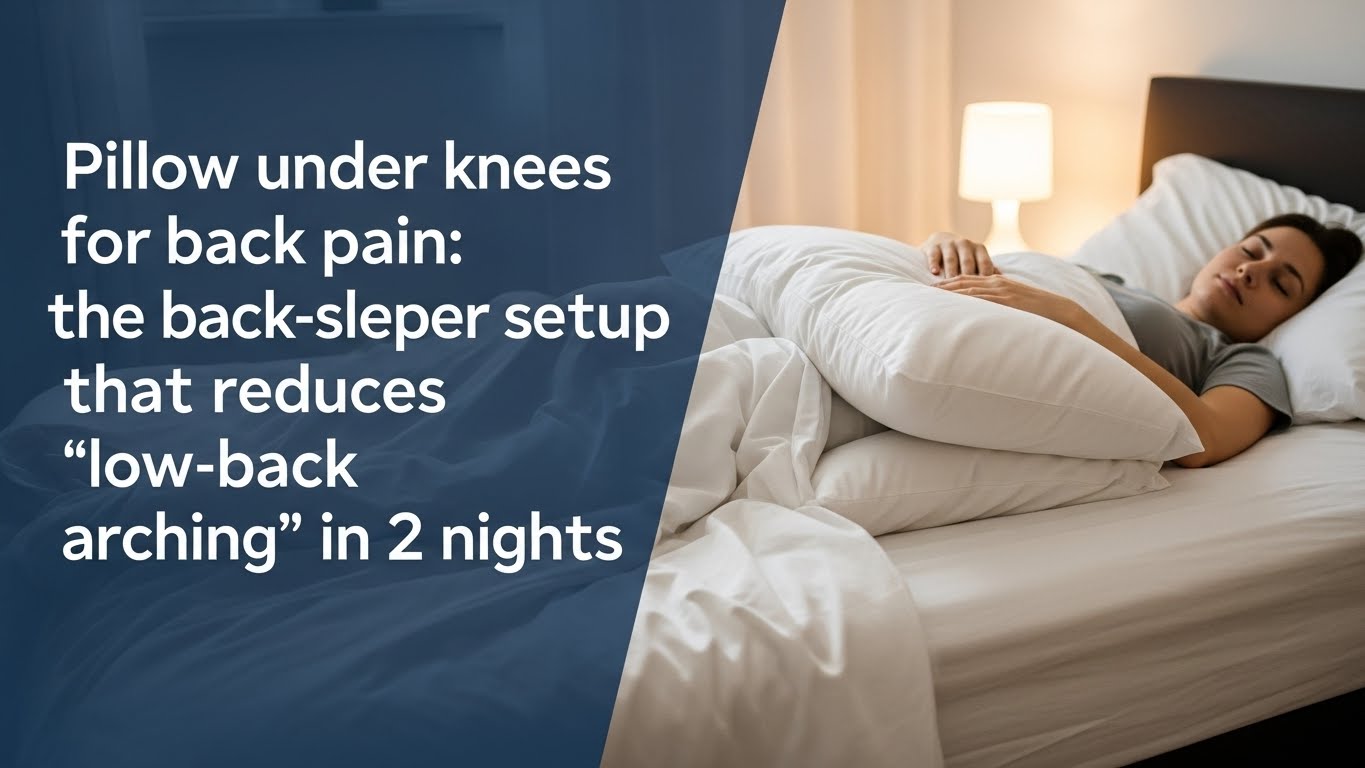
Last Updated: January 5, 2026 | Editorial Review: BodyEase Lab (Evidence-checked) | Note: Informational only (not medical advice)
Disclaimer: This page shares general education + practical setup guidance. It does not diagnose or treat. If you have radiating leg pain, numbness/weakness, fever, recent major injury, or bowel/bladder changes, seek medical evaluation.
Quick Standard (2-night test)
- If pillow under knees for back pain is a match for you, mornings usually feel different within 1–2 wake-ups.
- The goal is less low-back arch + easier first steps, not “perfect posture.”
- If hips pinch, knees feel pressured, or legs go numb → the pillow is likely too thick or placed too low.
pillow under knees for back pain sounds like one of those “internet comfort hacks”… but for back sleepers, it can be surprisingly logical. If you wake up and your lower back feels like it’s already “tight and arched,” this tiny change often reduces that overnight pull.
Below is the clean version: why it works (without overpromising), the setup that doesn’t slide away, and a fast way to tell if it’s helping your body.
💡 Quick Summary
For back sleepers, a pillow under the knees can reduce the feeling of low-back arching by gently bending the hips and knees. Many clinical education resources recommend under-knee support to help maintain a more comfortable, neutral position. If it works for you, mornings often feel less stiff within a couple of days.
On this page
1) Why it can help morning stiffness
2) Setup that stays put (height + placement)
3) Thickness & density rules (so you don’t feel worse)
4) Common mistakes
5) When to stop (red flags)
6) FAQ
7) Internal links
8) Sources
Why under-knee support can change morning back stiffness
If you lie flat on your back, some bodies drift into a stronger lumbar curve (that “arched” feeling). It can feel okay while you’re asleep and then show up as stiffness when you stand up.
1) It can reduce the “low-back arching” position
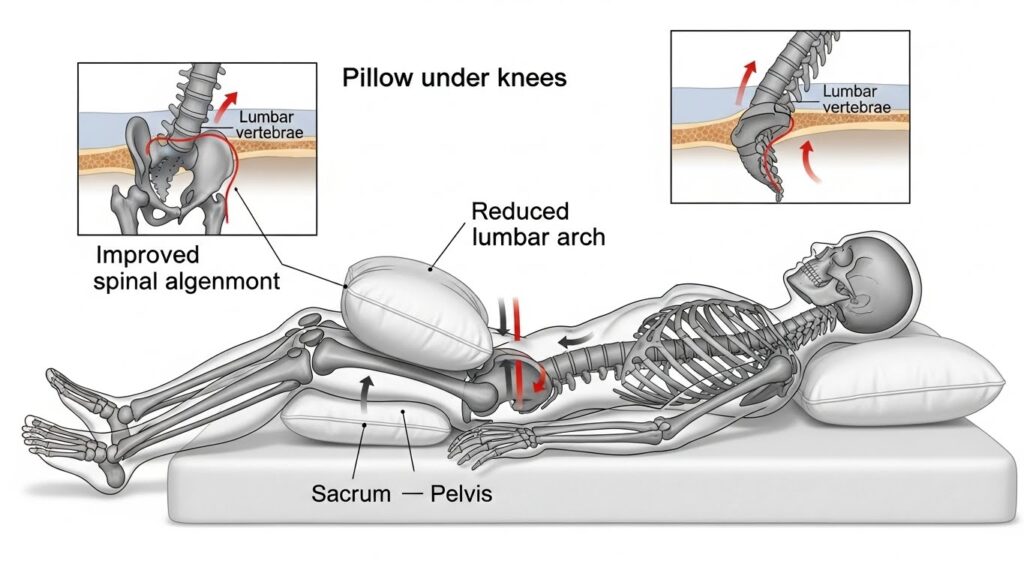
A pillow under the knees slightly bends the hips and knees. That small bend often reduces tension through the front of the hips and makes the lower back feel less “pulled.”
2) Think “pressure management,” not a cure
This is not a diagnosis or a fix for every cause of back pain. It’s a sleep-position support tool: you’re trying to make your overnight posture easier, so the first minutes after waking are smoother.
3) The biomechanics version (without the scary jargon)
When your knees lift a little, the front-hip muscles (often grouped as hip flexors, including the psoas) can feel less “on stretch.” That can reduce the tug that encourages the pelvis to tilt forward and the lower back to arch. It’s not magic—just a small geometry change that some people’s backs prefer.
One-line evidence anchor: Major clinical education sources describe placing a pillow under the knees for back sleepers as a way to reduce strain and improve comfort by supporting a more neutral position.
How to set it up so it stays put (2 minutes)
The most common failure isn’t “it didn’t help.” It’s: the pillow slides away, ends up on the floor, and you wake up annoyed. Here’s the stable setup.
| Step | What to do | Quick check |
|---|---|---|
| 1 | Start medium height (not a tall stack) | Knees gently bent, hips feel “unlocked” |
| 2 | Place it under the knees (not calves/ankles) | Lower back feels less arched within 30 seconds |
| 3 | Anchor trick: tuck the pillow into the blanket fold or under the fitted sheet edge | Less sliding overnight |
| 4 | Morning test: stand and walk 2 minutes | Notice if first steps feel less stiff |
My “too thick” warning sign If you wake up with front hip tightness, groin pinch, or knee pressure → go thinner. This is comfort-first. If your body argues, don’t force it.
Thickness & density rules (so you don’t create a new problem)
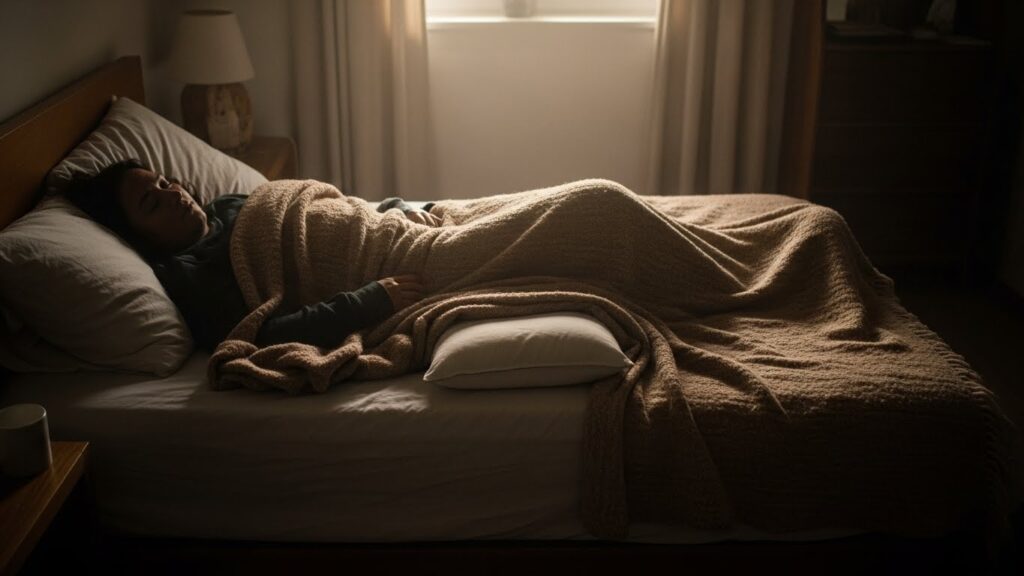
The “biomechanics” version matters here: too high can create hip flexor tightness. Too soft can collapse and do nothing. You want gentle bend + stable support.
| Setup element | Practical standard | Why it matters |
|---|---|---|
| Height (loft) | About 3–6 inches (adjust to comfort) | Enough bend to reduce arching without hip pinch |
| Density | Medium-firm pillow / bolster / memory foam | Maintains support through the night (doesn’t “bottom out”) |
| Placement | Directly under the knees (not mid-calf) | Targets the hinge point; avoids calf pressure and sliding |
Common mistakes (and why it feels worse)
- Stacking too high: hips can feel pinched in the morning.
- Placing it under calves/ankles: often doesn’t change low-back tension much (and can feel odd).
- Ignoring neck pillow height: if your head pillow is too tall/flat, your body compensates and the “chain” feels off.
- Judging it at night: the real test is how you feel after waking and moving for 2 minutes.
- Expecting it to solve everything: use it as a support tool while you also manage daytime habits.
When to stop (red flags)
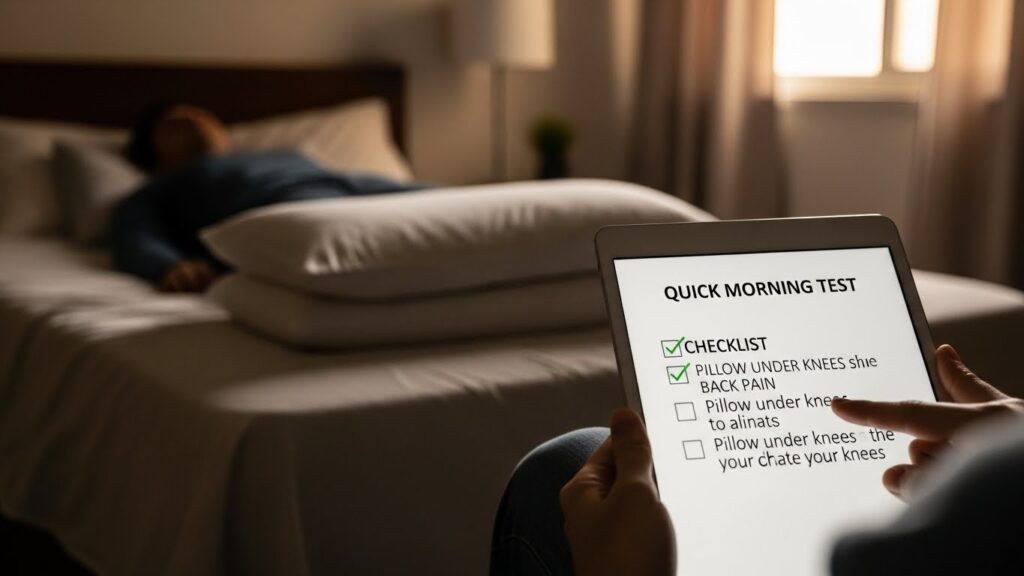
Safety note: Stop the experiment and consider medical evaluation if you have:
- New/worsening leg numbness or weakness
- Severe pain that doesn’t improve with position changes
- Unexplained fever, night sweats, or recent major injury
- Bowel/bladder changes or saddle-area numbness
FAQ
How high should the pillow be?
There’s no perfect number, but most people do best with a small-to-medium lift. If hips pinch or knees feel pressured, it’s too thick. If nothing changes at all, it may be too low/soft.
Is this only for back sleepers?
Mostly, yes. Side sleepers usually do better with a pillow between the knees to keep hips stacked.
What if I roll onto my side at night?
Totally normal. Still try it for 2–3 nights and judge mornings, not “staying perfectly still.”
Should I stretch right after waking?
Many people tolerate gentle walking first better than deep stretching during the “sensitive morning window.” If stretching helps you, keep it gentle and stop if symptoms flare.
Internal Links
Pillow Between Knees for Back Pain: Side Sleeper Hip-Stack Guide
Sleeping In Makes Back Pain Worse: Why Weekends Feel Tighter
Back Hurts After Waking Up: Why Pain Peaks Right After Getting Out of Bed
Sources (reputable clinical education)
Mayo Clinic: Sleeping positions that reduce back pain (pillow under knees for back sleepers)
Cleveland Clinic: Best sleeping positions for pain (pillow under knees concept)
Sleep Foundation: How to sleep with lower back pain (back-sleeper knee support)
Professional Disclaimer: This content is for educational purposes only. It does not provide medical diagnosis, treatment, or individualized care. If pain persists, worsens, or limits daily activities, consult a licensed healthcare professional.
Update Log:
– Jan 5, 2026: Consolidated setup rules (height + density + anchor trick) + expanded red-flag safety guidance + refreshed source list.

Hi, I’m Chris
I’m not a doctor or a physio. I’m just a guy who spent 5 years battling crippling morning back pain while sitting at a desk job.
Traditional advice didn’t work for me, so I became obsessed with researching the science of recovery. This blog contains the practical, tested routines that finally helped me wake up pain-free.