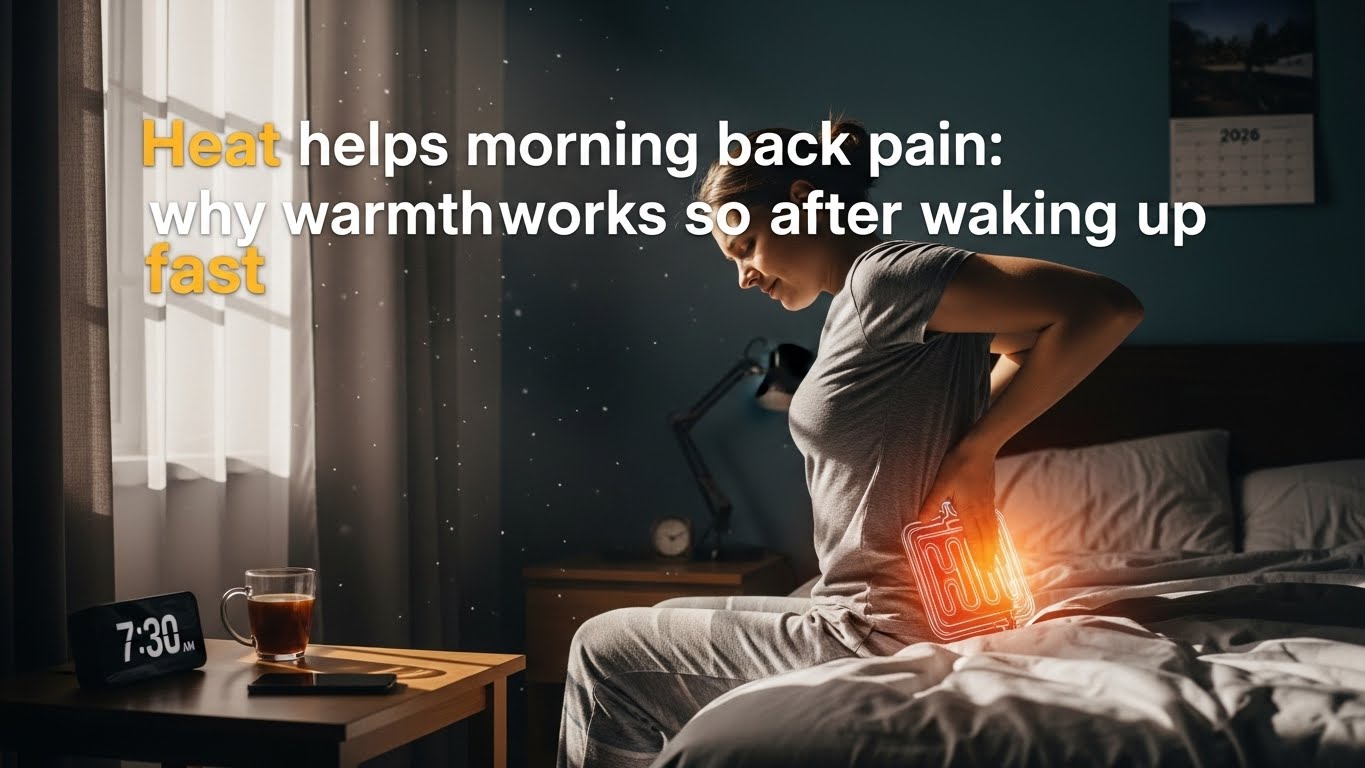
Why does heat help morning back pain so fast?
Heat helps morning back pain because warmth can improve comfort during the most “stiff and sensitive” part of the day. After hours of stillness, many people wake up with guarded muscles and less tolerant tissues. Gentle heat can promote blood flow, reduce the threat-feel of stiffness, and make early movement feel smoother—especially when you use heat as a transition tool, not a “stretch harder” signal.
- Warm first: 5–15 minutes (shower or heating pad) to soften the morning “guard.”
- Move gently next: light walking or easy posture changes to carry comfort forward.
- Load gradually: delay deep bending / heavy lifting until your back feels less reactive.
⚠️ Warning: When NOT to use heat
- Red flags: numbness in the groin/saddle area, new leg weakness, loss of bowel/bladder control, rapidly worsening symptoms.
- Possible acute swelling/bruising: if you suspect a fresh injury with swelling, heat may not be the best first choice.
- Fever / severe redness over the spine: consider medical evaluation.
- Skin risk: open wounds, significant irritation, reduced sensation, or conditions that increase burn risk.
Last Updated: Jan 01, 2026 | Editorial Review: BodyEase Lab (Evidence-checked) | Note: Informational only (not medical advice)
Disclaimer: This article shares general education and experience-based observations. It does not diagnose, treat, or replace professional medical care. If pain is severe, persistent, worsening, or affecting daily function, seek medical evaluation.
Quick Standard (morning heat rule)
- If heat helps morning back pain, use it to transition, not to force flexibility.
- Warm briefly → move gently → load gradually.
- Heat can improve comfort fast, but timing still matters more than intensity.
heat helps morning back pain was something I noticed long before I understood it. A warm shower, a heating pad, even a slightly warmer room—my back felt less guarded within minutes. That “too fast” relief made me curious: why do mornings respond so strongly to warmth?
This guide explains what heat actually does in the early morning window, why it often feels more effective right after waking, and how to use warmth safely without accidentally turning “relief” into rebound stiffness.
💡 Quick Summary
Heat helps morning back pain because warmth can increase comfort, reduce the “guarding” feel of stiffness, and make early movement feel safer after long inactivity. The best approach is short heat (5–15 minutes) followed by gentle movement, then a gradual return to normal sitting/bending—without chasing a deep stretch first thing.
1) Why heat works especially well in the morning
Morning is a strange window: you go from hours of stillness to sudden movement and weight-bearing. When the back feels stiff, it often isn’t begging for “more stretching.” It’s asking for a gentler transition—heat just happens to be a very effective bridge.
1-1) Warmth changes how stiffness feels (fast)
Heat doesn’t magically “fix” structures in minutes. But it can make stiffness feel less threatening, which often reduces protective muscle tension. In other words: you’re not necessarily more flexible—your body simply stops acting like every move is an emergency.
1-2) Heat pairs well with gentle movement
Warmth followed by light movement (like easy walking around the house) often feels smoother than jumping straight into stretching. The sequence matters: comfort first → motion second.
1-3) Morning sensitivity is partly about timing
Many people notice they can bend, sit, and lift more comfortably later in the day. That’s one reason heat feels “extra helpful” in the morning: it supports comfort during the most reactive period.
2) The physiology: why warmth can feel like a “reset”
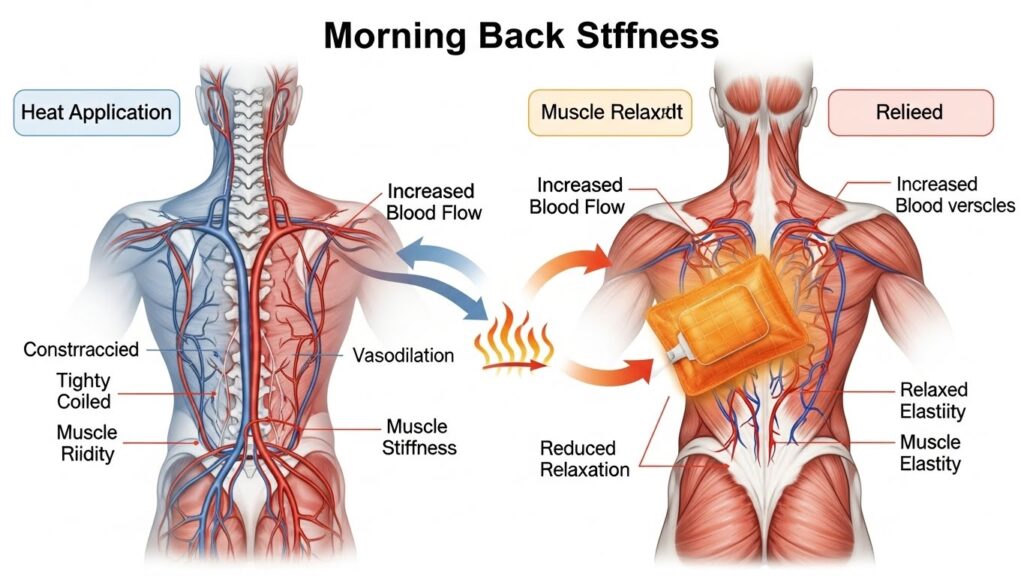
The simplest version: heat helps because it changes the local environment—circulation, tissue feel, and your nervous system’s threat response. Here’s the more detailed (still human) version:
2-1) Heat encourages circulation (vasodilation)
Warmth can widen blood vessels (vasodilation), increasing local blood flow. For many people, that correlates with a faster drop in “guarded” tightness and an easier start to movement.
2-2) Warmth can improve tissue “give” (viscoelastic compliance)
Many soft tissues behave in a viscoelastic way—temperature and movement can influence how “stiff” they feel. In plain language: gentle heat can make the area feel less rigid for a short window, which is perfect for a morning transition.
2-3) Heat can calm the protective alarm
If your back is already sensitive, your nervous system can treat normal movement like a threat. Heat often makes the first few minutes feel safer—so your body stops bracing as hard.
One-line anchor: Thermal therapy is commonly used to reduce pain and improve comfort by warming tissues and influencing how the body tolerates movement.
3) Heat vs. ice: which fits the morning problem?
If your issue is morning stiffness after rest, heat often matches the goal better than ice: you’re trying to improve comfort and movement readiness—not numb a fresh swollen injury.
| Feature | Heat (morning stiffness tool) | Ice (acute irritation tool) |
|---|---|---|
| Main goal | Comfort + easier movement | Numbing + calming a fresh flare |
| Best timing | After waking / before activity | After a sudden strain or hot flare feeling |
| How it “feels” | Loosens the guarded feeling | Dulls sensation temporarily |
4) The safe transition heat protocol (the version that doesn’t backfire)
The key isn’t “more heat.” It’s using heat as a brief bridge into movement. Think: prime → pump → proceed.
The 3-Step Morning Warmup
- Apply mild heat (5–15 min): warm shower or heating pad. Keep it comfortable, not aggressive.
- Move gently (2–5 min): light walking, easy posture changes, slow “un-sticking” movements. The goal is to exit stillness, not chase range.
- Load gradually (next 15–30 min): normal tasks first. Delay deep bending, heavy lifting, and “big stretches” until your back feels less reactive.
5) Mistakes that make heat backfire
- Using heat as a “green light” for deep stretching: comfort can rise faster than tolerance.
- Too hot / too long: more intensity doesn’t equal more benefit (and increases skin risk).
- Heat… then couch: warmth followed by long slumped sitting can bring stiffness right back.
- Sleeping on a heating pad: burn risk is real—avoid overnight use.
Practical rule:
If heat makes you feel better, spend that “better window” on gentle motion and better transitions—not on proving you can bend deeper.
6) FAQ
Is heat better than ice in the morning?
Many people prefer heat for stiffness after rest. Ice is often used more for acute irritation or swelling. If you’re unsure, choose the option that improves comfort without increasing symptoms.
How long should I use heat?
Short sessions (about 5–15 minutes) are often enough to ease the transition. If your skin gets red, irritated, or numb, stop and reassess.
Should I move right after heat?
Yes—gentle movement helps carry the comfort forward. Walking lightly for a few minutes is often the simplest “next step.”
Can I use a heating pad in bed before getting up?
Some people find it helpful as a pre-warm strategy, as long as you keep it brief and safe (avoid sleeping with it on).
Internal Links
Back Hurts After Waking Up: Why Pain Peaks Right After Getting Out of Bed
Sitting Right After Waking Up Hurts: Why My Back Felt Worse
Bending Over in the Morning Hurts: Why That First Bend Feels So Bad
Sources (checked)
- Sleep Foundation: Waking up with lower back pain
- NIH (PMC): Mechanisms and use of thermal therapy in pain management
Professional Disclaimer: This content is for educational purposes only. It does not provide medical diagnosis, treatment, or individualized care. Heat therapy should be used with caution if you have circulation issues, reduced sensation, or conditions that increase burn risk. If pain persists, worsens, or includes neurological symptoms, consult a licensed healthcare professional.
Update Log:
– Jan 04, 2026: Merged practical heat routine + added “when not to use heat” safety box + clarified heat vs ice + strengthened step-by-step protocol.

Hi, I’m Chris
I’m not a doctor or a physio. I’m just a guy who spent 5 years battling crippling morning back pain while sitting at a desk job.
Traditional advice didn’t work for me, so I became obsessed with researching the science of recovery. This blog contains the practical, tested routines that finally helped me wake up pain-free.