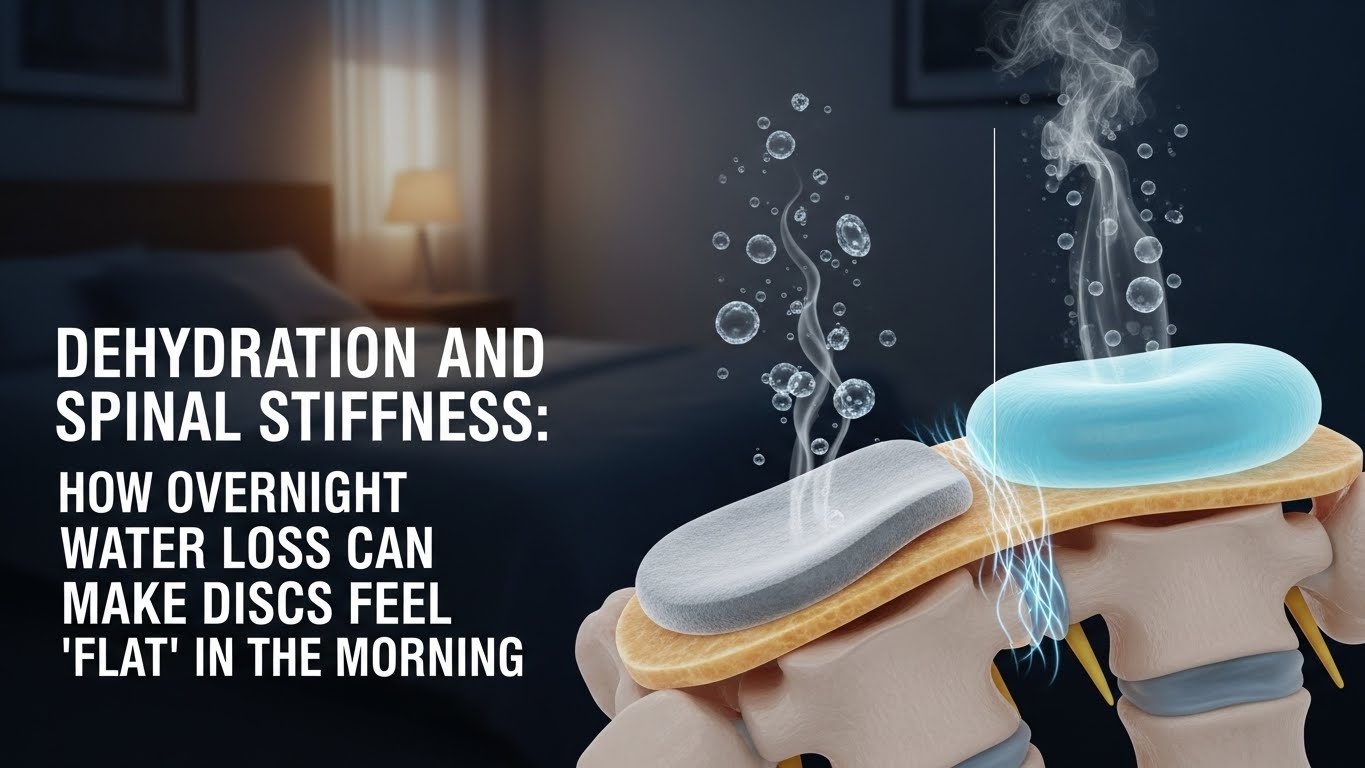
Waking up “brittle” and stiff? Overnight dehydration + dry air can make your spine feel less springy.
Overnight water loss is normal (you lose moisture through breathing and skin). But if you start the night a bit under-hydrated—or you add alcohol, a very salty dinner, or a dry bedroom—your tissues can feel “drier” by morning. Spinal discs and surrounding soft tissue behave like a water-and-gel system. When baseline fluid balance is low, the first movements can feel tight, creaky, or restricted.
The goal isn’t chugging water at 6 AM. It’s a simple 24-hour hydration rhythm plus a gentle first-5-minutes routine so your nervous system doesn’t start the day in “guarding mode.”
🚩 Red flags (don’t self-manage blindly)
- Fever, unexplained chills, or significant night sweats with new back pain
- New weakness, major numbness, trouble walking, or “foot drop”
- Bowel/bladder changes or groin numbness (urgent)
- Severe pain that is rapidly worsening, constant, or waking you nightly
- Conditions where fluids/electrolytes matter (kidney/heart issues) — ask a clinician before changing hydration/electrolytes
This page is educational and can’t diagnose the cause of pain.
Last Updated: January 16, 2026 | Editorial Review: BodyEase Lab (sleep + movement patterns) | Scope: Evidence-informed, non-diagnostic guidance
My “tell” was annoyingly consistent. If I went to bed a little dry—late salty dinner, a couple drinks, or just forgetting water—I’d wake up with a back that felt like it had lost its bounce. Socks and sink-bending felt sharper. Sitting felt heavier. Not dramatic pain… more like my spine was “unhappy” about being asked to move.
The fix wasn’t a heroic stretching routine. It was boring, repeatable stuff: hydration timing, a quick check on room dryness, and a calm startup sequence before I asked my spine to do real work. (That’s also why morning stiffness improves after moving—sometimes you’re not “broken,” you’re just not warmed and rehydrated yet.)
The “dry sponge” effect (plain English, not scary)
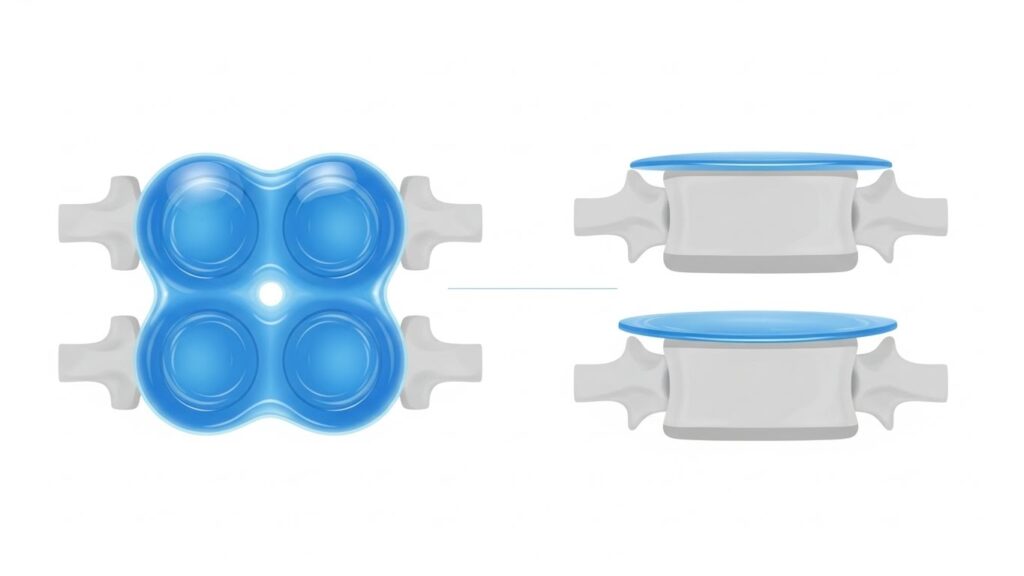
Your spine is supported by muscles, fascia, joints, and intervertebral discs. Discs aren’t hard rubber pads. They’re more like water-rich cushions that respond to pressure, time, and fluid balance. During the day, gravity and sitting/standing load the discs. At night, when load changes, discs can re-balance fluid (a normal process people sometimes describe as “rehydration” of the spine).
Here’s the useful part: your body constantly shifts water between tissues using osmotic pressure (where water “wants” to go). If your overall fluid balance is low—or your bedroom air is very dry—tissues can feel less cushioned in the morning. That can trigger guarding (your nervous system tightening up to protect you), which makes stiffness feel louder than it needs to.
Quick mental model
Lower baseline fluid → tissues feel “drier” → first movements feel higher-friction → guarding increases → morning stiffness spikes. Your job is to lower the spike, not “force flexibility.”
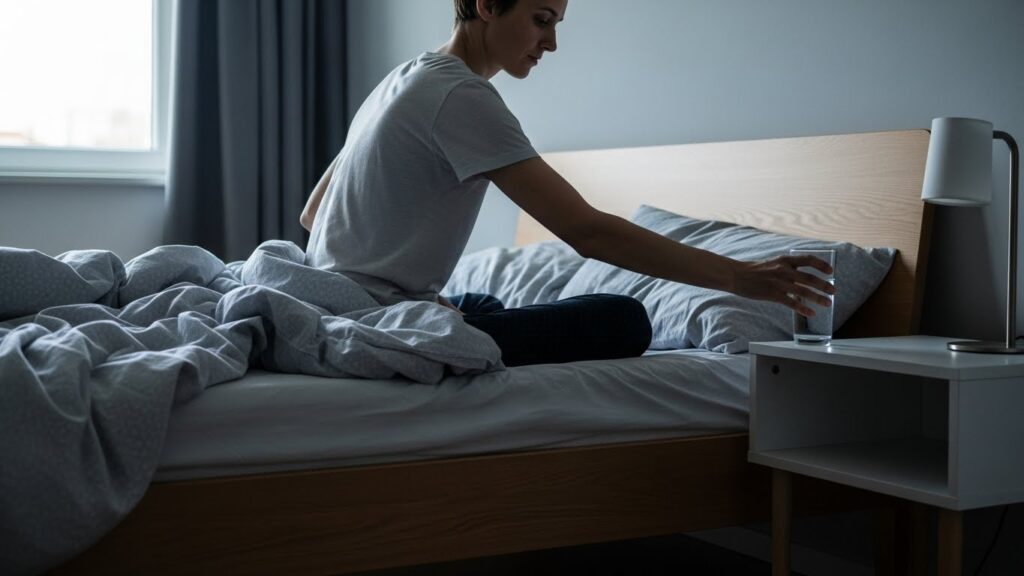
Why mornings can feel worse than bedtime
- Silent water loss: you exhale moisture all night (and sweat a bit, even if you feel “dry”).
- Dry room effect: heating/AC can drop humidity and increase thirst-by-morning.
- Alcohol + very salty food: can shift fluid balance and fragment sleep—both can amplify sensitivity.
- Stillness: long immobility can make first movements feel “rusty,” especially if you wake up tense.
- Timing: if you wake dry, going straight to strong coffee or a rushed bend can feel rough for some people.
The disc-friendly hydration rhythm (easy, realistic, 24-hour)
This isn’t about perfect numbers. It’s about staying out of the dehydration dip that shows up as morning stiffness. If you have kidney/heart conditions or take meds that affect fluids, use this only with professional guidance.
Step 1 (Tonight): two small checks before bed
- Urine color check: aim for light-yellow most days (not perfectly clear, not dark).
- Bedroom dryness: if you wake with dry mouth, consider humidity comfort (humidifier at a moderate setting, or reduce over-heating). Comfort-first, no extremes.
Step 2 (Daytime/Evening): front-load earlier, not at midnight
- Try to drink most fluids before the last 2 hours before sleep (fewer bathroom wake-ups).
- If dinner is very salty or you had alcohol, add a bit more water earlier in the evening—avoid “panic drinking” right before bed.
Step 3 (Morning): 90-second rehydrate + 3-minute unlock
- Small water first: a small glass of water (sip, don’t chug). Wait 2–3 minutes.
- Micro-moves in bed (30 seconds): ankle pumps for 20 seconds + 5 gentle glute squeezes.
- Stand-up unlock (90 seconds): 5 mini hip-hinges (10–15% bend) + 5 pelvic tilts. Calm pace.
- Warm cue (optional): 30–60 seconds of warm shower water on low back/hips if you run cold.
Pro tip (tiny but high impact)
If you wake very dry (dry mouth, headache, “sandpaper” feeling), a small electrolyte option can help occasionally—especially after sweating, alcohol, or a very salty meal. Keep it moderate. More isn’t automatically better.
Is it dehydration… or something else? (pattern map)
| Symptom profile | Common driver | Try first |
|---|---|---|
| Stiffer after alcohol or salty dinner | Fluid shift + fragmented sleep | Earlier hydration + gentle morning ramp |
| Dry mouth + morning tightness | Overnight water loss + dry room | Humidity comfort + small water first |
| Better after warmth + walking | Low temperature + guarding | Warm cue + micro-moves before bending |
| Stiff + swollen + lasts > 60 min | Possible inflammatory condition | Medical evaluation recommended |
These are pattern clues, not diagnoses. Use them to test what changes your morning trajectory.

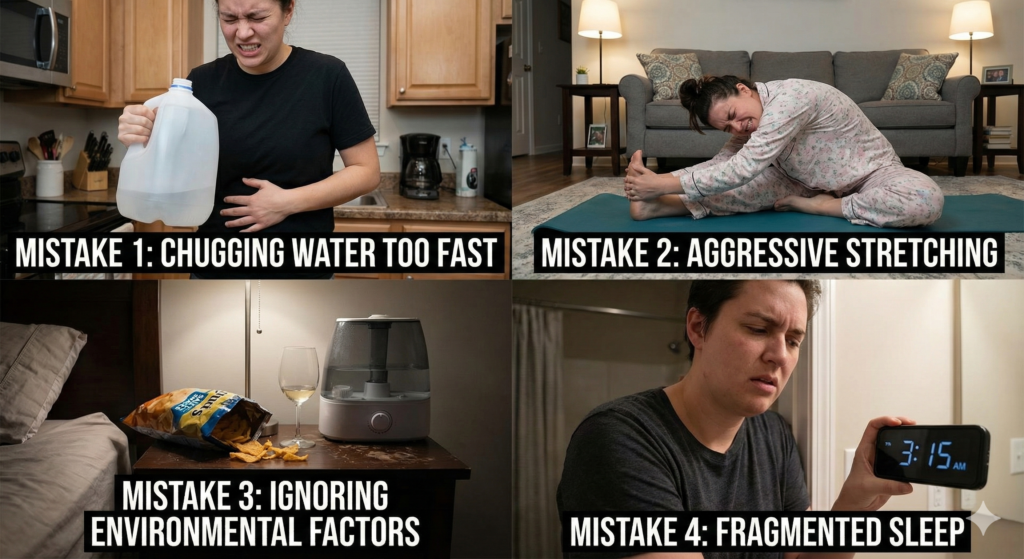
Common mistakes that backfire
- Chugging a huge amount of water at once: it can upset your stomach and won’t instantly change how tissues feel.
- Deep stretching right away: cold/dry tissues often feel worse with aggressive range first thing.
- Only thinking “more water”: sometimes room dryness, alcohol/salt timing, or sleep disruption is the bigger lever.
- Drinking too late: frequent bathroom wake-ups fragment sleep and can amplify pain sensitivity.
A simple 7-day test (no overthinking)
For one week: keep bedtime/wake time steady, front-load hydration earlier, reduce extreme late salt/alcohol, and do the 5-minute morning routine. If stiffness improves, hydration + rhythm was likely part of your equation.
FAQ
Can dehydration really affect back stiffness?
It can be a contributor for some people. Fluid balance influences how tissues feel and how “guarded” your system becomes after long stillness. It’s rarely the only cause, but it’s a low-risk lever to test.
How much water should I drink?
There’s no single number for everyone. A practical approach is thirst + urine color + how you feel. If you have conditions where fluids matter, ask a clinician for personalized targets.
Does coffee make stiffness worse?
Not always. But if you wake dry, coffee before water can feel rough for some people. Try water first for a week and compare.
What about electrolytes?
Sometimes helpful in small amounts after sweating, alcohol, or very salty meals. Avoid extremes. When in doubt, keep it simple: consistent hydration + steady routine.
When should I get checked?
If you have red flags, progressive symptoms, or stiffness lasting over an hour most mornings (especially with swelling), get medical evaluation.
Related BodyEase Lab posts
If your mornings feel tight no matter how long you sleep, these help connect the dots:
Slept 8 hours, still stiff: why your body can feel tight anyway
Bedroom setup and morning stiffness: the one change that helped recovery
Sleeping in makes back pain worse: the immobility paradox
Morning stiffness improves after moving: what your body is doing
Heat helps morning back pain: why warmth works so fast
Sources
- MedlinePlus (NIH): Dehydration overview
- MedlinePlus (NIH): Back pain overview
- PubMed search: intervertebral disc hydration and osmotic pressure
Professional disclaimer
This content is for educational purposes only and does not diagnose or treat medical conditions. If you have red flags (fever, significant swelling, new weakness/numbness, bowel/bladder changes, severe or worsening pain), seek professional care. If you have kidney/heart conditions or take medications that affect fluids/electrolytes, consult a clinician before changing hydration habits.
Update log
2026-01-16: Published initial version. Added hydration rhythm protocol, pattern map table, 7-day test, and safety screening box.

Hi, I’m Chris
I’m not a doctor or a physio. I’m just a guy who spent 5 years battling crippling morning back pain while sitting at a desk job.
Traditional advice didn’t work for me, so I became obsessed with researching the science of recovery. This blog contains the practical, tested routines that finally helped me wake up pain-free.