
This content is for informational purposes only and is not medical advice.
If you’ve ever woken up and felt like your back needed a few minutes just to “unlock,” you’re not alone. I’ve been there too. For a long time, my mornings started with stiffness, slow movements, and that uncomfortable feeling when bending over felt harder than it should.
Morning back stiffness often comes from overnight muscle tension, limited movement during sleep, and how your body wakes up. Small changes in your first 10–15 minutes and sleep setup can help reduce stiffness over time. Consistency usually matters more than intensity.
Table of contents
- Why morning back stiffness feels worse after waking up
- What I noticed after tracking my mornings
- A simple morning routine that helped me
- Sleep setup changes that supported recovery
- Before vs after: what actually changed
- Quick checklist for tomorrow morning
- FAQ
- References
Why morning back stiffness feels worse after waking up
A lot of people feel fine during the day but stiff right after waking up. That doesn’t always mean something is “wrong.” In many cases, it’s about what happens overnight and how your body starts moving again.
- Your muscles stay mostly still while you sleep
- Blood flow is slower first thing in the morning
- Your first movements are often sudden or rushed
I used to think it was just age or lack of stretching. What surprised me was how much my first few minutes in the morning mattered.
What I noticed after tracking my mornings
Instead of guessing, I paid attention for a few weeks. I didn’t change everything at once. I just noticed when stiffness felt better or worse.
1. Rushing made it worse
On mornings when I jumped out of bed and bent over right away, my back felt tighter.
2. Sleeping in didn’t always help
Oddly enough, days I slept longer sometimes felt worse. Staying in one position too long seemed to play a role.
3. Gentle movement worked better than hard stretching
For me, forcing a deep stretch right away often backfired. Slow, easy movement felt safer and more helpful.

A simple morning routine that helped me
This isn’t about fixing anything overnight. It’s about helping your body ease into the day.
Step 1: Pause before getting up
I take about 60 seconds after waking up to breathe and let my body settle before moving.
Step 2: Avoid bending right away
I delay things like tying shoes or picking something up from the floor until my body feels warmer.
Step 3: Sit and move gently
While sitting on the edge of the bed or a chair, I move my upper body side to side slowly.
Step 4: Walk lightly for a few minutes
A short walk around the house helps my back feel less stiff.
Step 5: Save deeper movement for later
Once my body feels awake, everyday movements feel easier and smoother.

Sleep setup changes that supported recovery
Morning habits helped, but sleep still mattered.
- Pillow height: When my neck felt strained, my back often did too.
- Room temperature: Sleeping too cold made my body feel tense.
- Mattress support: Very soft surfaces sometimes left me feeling stiff.
I didn’t replace everything. I just adjusted what felt off.
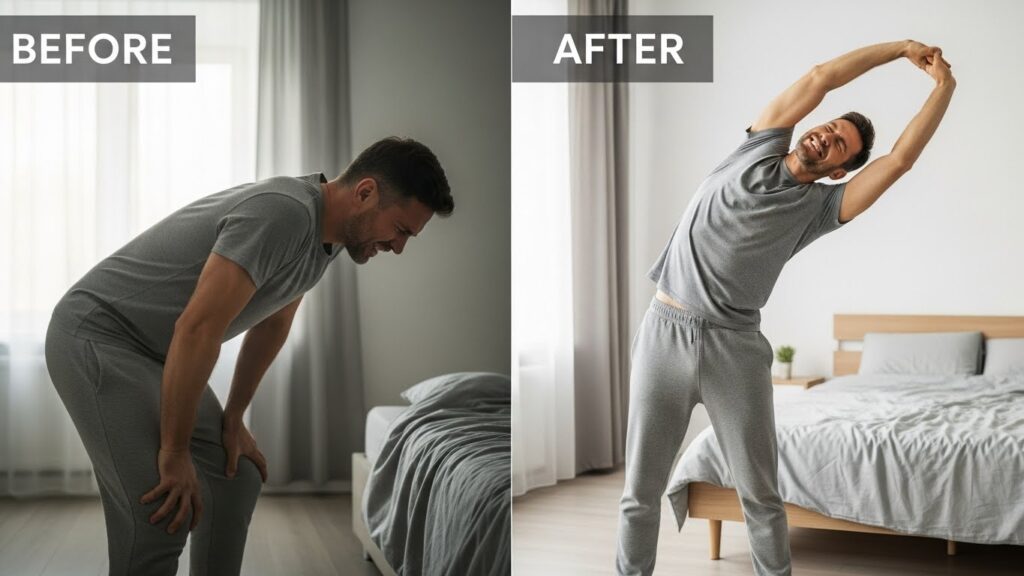
Before vs after: what actually changed
| Before | After |
|---|---|
| Bending felt uncomfortable right away | Movement felt easier after warming up |
| Mornings felt slow and frustrating | Body felt more responsive |
| Stretching felt risky | Gentle movement felt safer |
Quick checklist for tomorrow morning
- Pause for a minute before getting out of bed
- Avoid bending deeply right away
- Move gently while seated
- Walk lightly for a few minutes
- Save stronger movements for later
FAQ
Is morning back stiffness common?
Yes. Many people experience it, especially when movement is limited overnight.
Should I stretch right after waking up?
Some people feel better with gentle movement first. Strong stretching can wait.
What if stiffness lasts all day?
If discomfort sticks around or worsens, it may be worth checking in with a professional.
Does sleep position matter?
It can. But how you start your morning also plays a role.
Related articles
This is post #1. From post #2 onward, three internal links will be added here.
References
- Mayo Clinic – Back pain overview
- NIAMS (NIH) – Back pain information
- Sleep Foundation – Sleep and physical recovery
Important note: This article shares general information and personal experience only. It is not intended to diagnose, treat, cure, or prevent any condition. If symptoms are severe, persistent, or concerning, consider consulting a qualified healthcare professional.
Last updated: 2025-12-22

Hi, I’m Chris
I’m not a doctor or a physio. I’m just a guy who spent 5 years battling crippling morning back pain while sitting at a desk job.
Traditional advice didn’t work for me, so I became obsessed with researching the science of recovery. This blog contains the practical, tested routines that finally helped me wake up pain-free.