Last Updated: January 11, 2026 | Editorial Review: BodyEase Lab (Evidence-checked) | Note: Informational only (not medical advice)
Disclaimer: This article is for educational purposes only. It does not diagnose, treat, or replace professional medical care. If stiffness is severe, persistent, worsening, or paired with numbness/weakness/fever, seek professional guidance.
Quick Reality Check
- If you wake up stiff even after “good” sleep, your bedroom setup can be the hidden variable.
- Recovery isn’t only about the mattress. It’s about the micro-climate around your body all night.
- The goal isn’t “perfect comfort.” It’s less guarding and easier first movement in the morning.
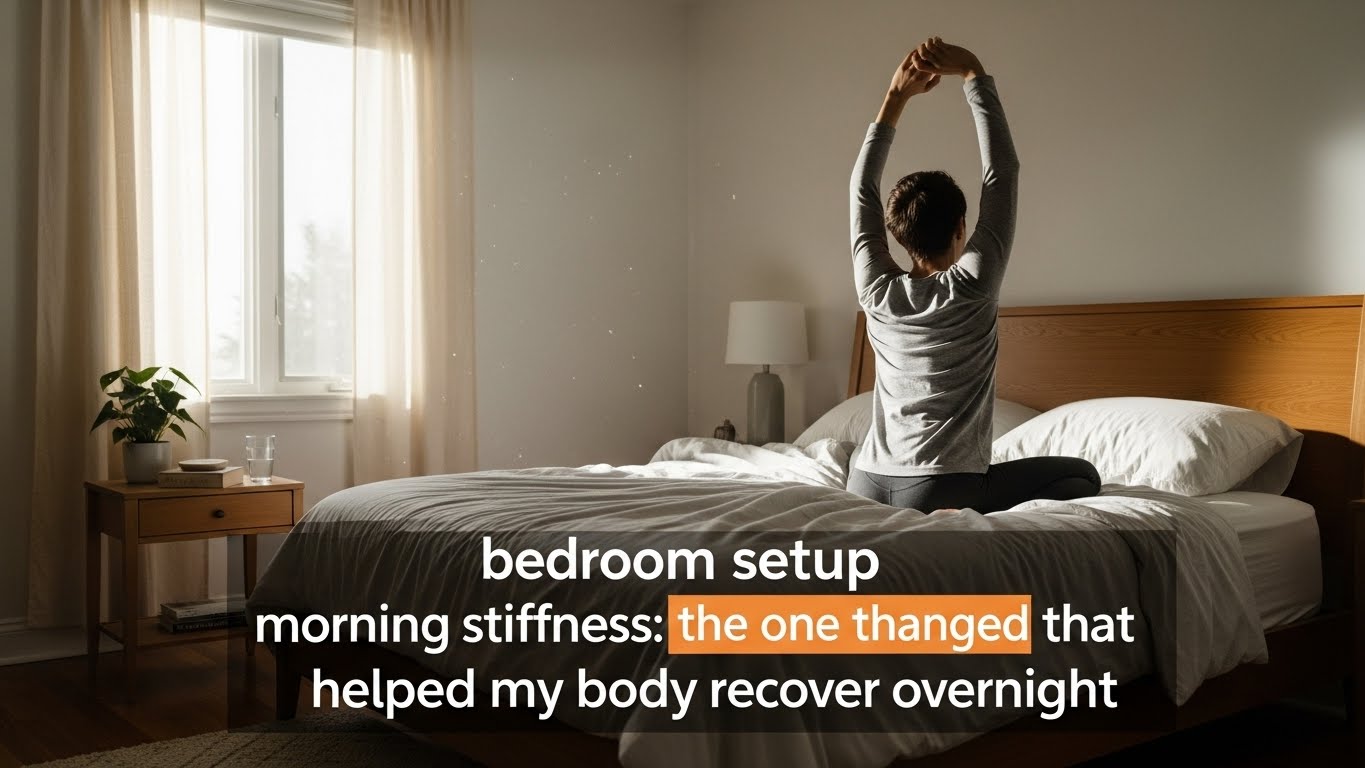
I ignored bedroom setup morning stiffness for a long time. If my back felt tight, I blamed my workouts, my chair, stress… honestly, anything except the room. But when my sleep schedule became consistent and the stiffness still showed up like clockwork, I finally looked at what was happening between midnight and 6 a.m.—not what I was doing at 3 p.m.
What surprised me wasn’t some fancy fix. It was one boring, practical change that made my mornings feel noticeably less “rusty.” Not cured. Not magical. Just… easier.
💡 Quick Summary
Bedroom setup morning stiffness often comes from a “perfect storm” of cold spots (drafts), fragmented deep sleep (light), and static posture. When your body feels slightly threatened overnight—cold air on joints, sudden brightness, uneven coverage—it tends to stay guarded. Guarding can show up as stiffness the moment you try to move.
Why bedroom environment affects overnight recovery
Sleep isn’t just “shutdown time.” It’s when your nervous system downshifts, tissues rehydrate, and your body gets a chance to calm its protective tone. The catch is… your body only fully relaxes when the environment feels predictable. If your room quietly nudges you into tension—cold air hitting your back, light leaking in, noisy airflow—you can sleep for 8 hours and still wake up stiff.
1) Temperature isn’t the problem. Cold exposure is.
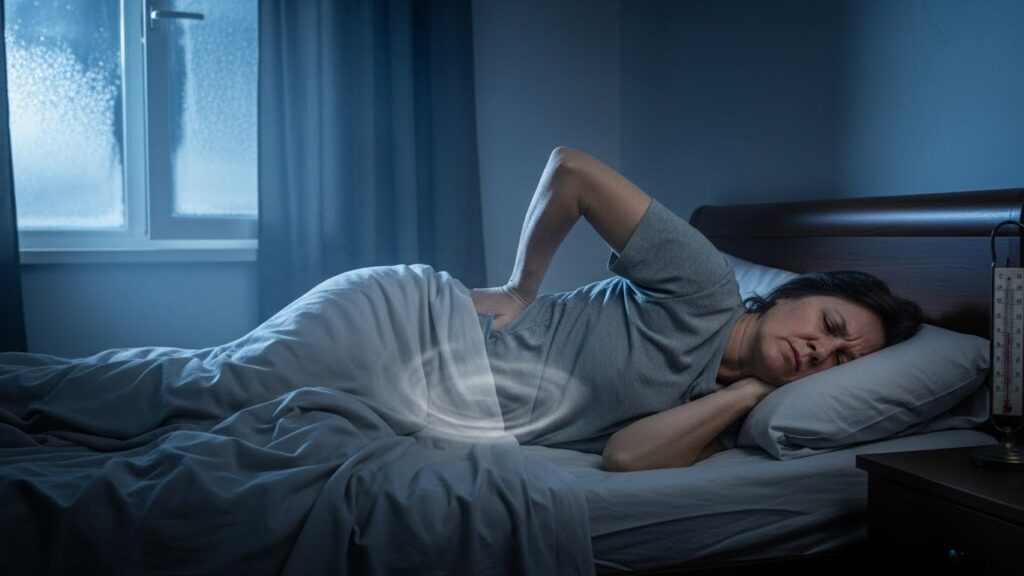
People talk about “ideal sleep temperatures,” but what matters for stiffness is whether your hips/lower back/shoulders stay protected through the night. A cool room can feel great… until your blanket shifts at 3 a.m. and your lower back gets hit with a draft. That’s when you unconsciously brace.
2) Light pollution can steal the “deep” part of sleep
You don’t need a bright lamp for sleep to fragment. Streetlights, hallway light, charger LEDs, early sunrise—small leaks can add up. When sleep becomes lighter and more broken, your next-day comfort threshold drops. You wake up feeling more sensitive to normal stiffness, and the first movement feels harder than it should.
3) Static posture all night makes “first movement” feel sticky
Healthy sleep includes tiny shifts that redistribute pressure. But if you’re slightly cold, you tend to lock into a tight position to conserve heat. If bedding is heavy/restrictive, you move less. Less micro-movement means tissues stay in one pattern longer—then your body complains when you finally ask it to move.
One-line evidence anchor: Temperature and light conditions influence sleep quality, and sleep quality influences how “ready” your body feels the next day.
The one bedroom change that helped my recovery
I didn’t change my mattress. I didn’t buy a new pillow. I stopped letting my lower back and hips get cold during the night.
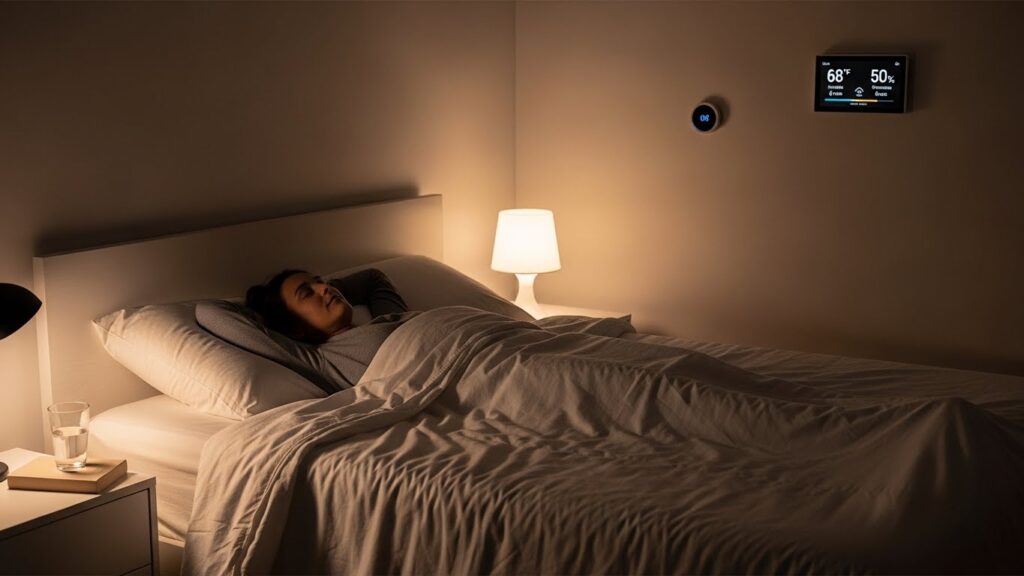
The “one thing” was thermal consistency—keeping my core area (hips/lower back) in a stable, draft-free zone from bedtime to morning. Not overheating. Not sweating. Just consistent protection.
What I changed (simple, not dramatic)
- I raised room temp slightly (even 1–2 degrees) or used a breathable extra layer instead of blasting heat.
- I made blanket coverage “stay put” so my midsection didn’t get exposed at 3–5 a.m.
- I blocked the draft source: vent direction, gap near the window, or airflow that hit the bed directly.
The result wasn’t dramatic “pain relief.” It was more valuable than that: easier first movement. Sitting up felt less like a negotiation. My body didn’t feel like it needed a full warm-up just to exist.
A 3-night test you can run (no shopping required)
If you want to know whether your room setup is part of your stiffness, try a small experiment for three nights. Don’t change everything—change one lever and watch the morning.
| Night | What to adjust | What to notice in the morning |
|---|---|---|
| Night 1 | Draft control (vent direction / window gap / bed position) | Does your lower back/hips feel less “locked”? |
| Night 2 | Coverage stability (blanket stays on midsection) | Is sitting up easier without a warm-up? |
| Night 3 | Light control (blackout/eye mask/cover LEDs) | Do you feel more “ready to move” even before stretching? |
This isn’t a medical test. It’s just a way to spot patterns. If the same change repeatedly gives you a smoother morning, you found a real lever.
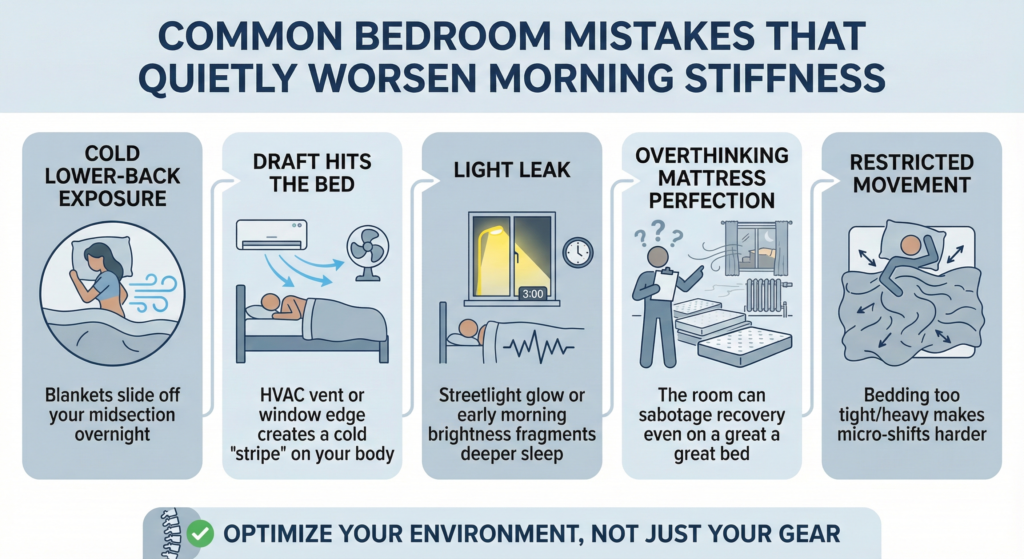
Common bedroom mistakes that quietly worsen morning stiffness
- Cold lower-back exposure: blankets slide off your midsection overnight.
- Draft hits the bed: HVAC vent or window edge creates a cold “stripe” on your body.
- Light leak: streetlight glow or early morning brightness fragments deeper sleep.
- Overthinking mattress perfection: the room can sabotage recovery even on a great bed.
- Restricted movement: bedding too tight/heavy makes micro-shifts harder.
None of this replaces posture, strength, or rehab work. But a supportive room can stop your body from “resetting to guarded mode” every single night.
FAQ
Should I sleep in a warmer room if I wake up stiff?
Not necessarily warmer—more consistent. If your lower back feels cold in the morning, focus on blocking drafts and keeping coverage stable.
Does this replace posture changes or strength work?
No. Think of the bedroom setup as a recovery assistant. It protects the progress you’re trying to make during the day.
How fast can this help?
Some people notice a difference within a few nights. Others need a week to see a reliable pattern—especially if sleep has been fragmented.
Can light really affect how stiff I feel?
Indirectly, yes. Poor sleep quality can lower your comfort threshold and increase sensitivity, which can make normal morning stiffness feel heavier.
Internal Links
Sleep Position Morning Stiffness
Pillow Under Knees for Back Pain
Back Hurts After Waking Up
Sources (checked)
Sleep Foundation: Sleep environment
Cleveland Clinic: Ideal sleeping temperature
NIH: Environmental factors and sleep quality
Professional Disclaimer: This article describes general environmental factors that can influence how stiff you feel in the morning. It does not rule out medical causes. If stiffness is severe, persistent, worsening, or paired with concerning symptoms, consult a qualified healthcare professional.
Update Log:
– Jan 11, 2026: Updated structure, clarified “thermal consistency” change, added 3-night test, and re-checked references.

Hi, I’m Chris
I’m not a doctor or a physio. I’m just a guy who spent 5 years battling crippling morning back pain while sitting at a desk job.
Traditional advice didn’t work for me, so I became obsessed with researching the science of recovery. This blog contains the practical, tested routines that finally helped me wake up pain-free.