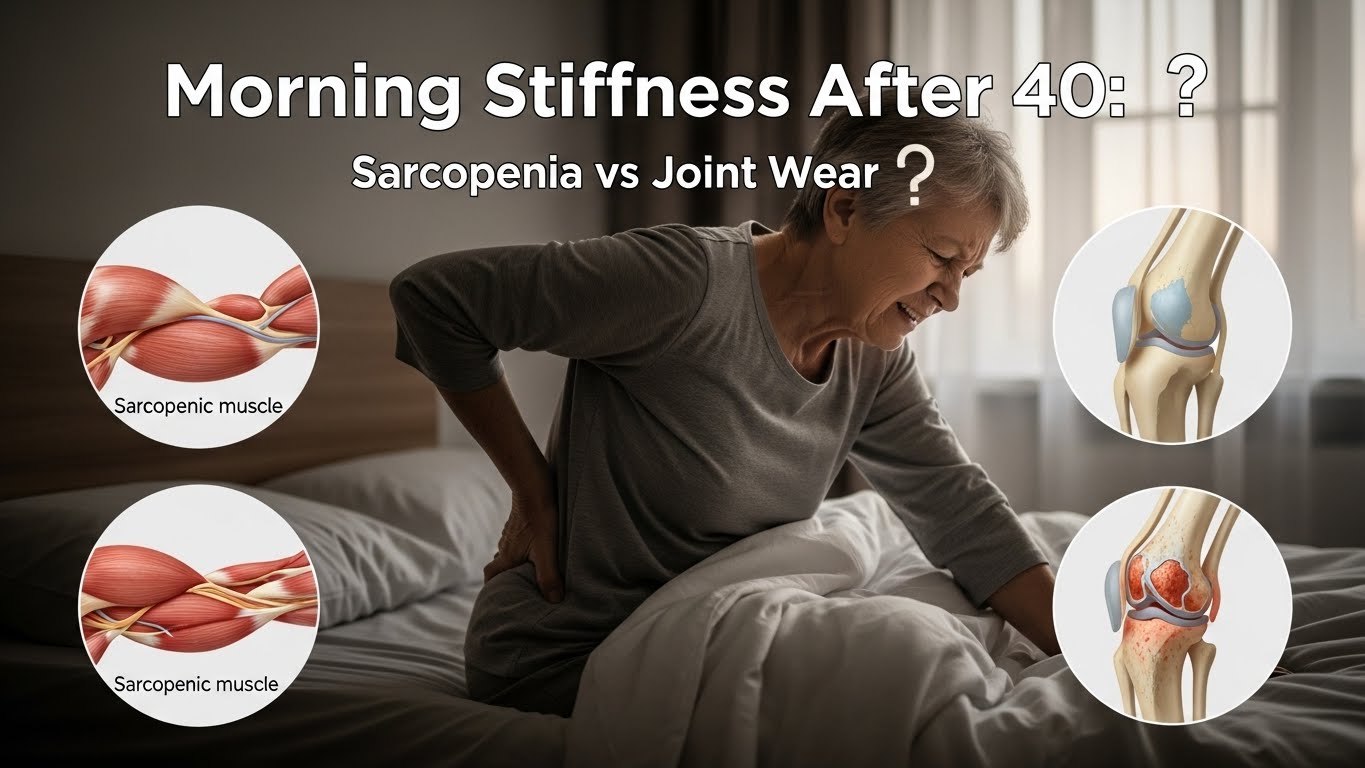
Morning stiffness after 40 isn’t “one thing.” It’s usually a tug-of-war between muscle support and tissue sensitivity.
If you wake up feeling “locked,” the goal isn’t to label yourself. It’s to spot your pattern: Do you feel better when you’re supported and moving slowly (support gap), or do you melt under warmth and gentle motion (sensitivity + temperature)?
- Fast clue: 2-minute “bucket test” before coffee.
- Fast relief: 8-minute “unlock” sequence before bending or sitting.
- Long-term fix: 3-minute strength anchors, 3x/week (no drama, no gym required).
🚩 Red flags (don’t self-manage blindly)
- Fever, unexplained chills, or a hot/red swollen area
- New weakness, major numbness, foot drop, or trouble walking
- Bowel/bladder changes or groin numbness (urgent evaluation)
- Severe pain after a fall/accident, or night pain that is rapidly worsening
- Morning stiffness with major swelling that lasts over an hour most days
This page is educational and pattern-based. It can’t diagnose a condition.
Morning stiffness after 40: is it muscle support or joint sensitivity?
Last Updated: January 17, 2026 | Editorial Review: BodyEase Lab (movement + recovery patterns) | Scope: YMYL-safe, non-medical education
There’s a specific kind of “over-40 morning” that’s hard to explain until you feel it. You’re not injured. You’re not sick. You just… don’t boot up like you used to. The first bend at the sink feels risky. Socks feel like a mini event. Sitting down too early feels like your back “locks in.”
What changed isn’t only your joints. A lot of the time it’s how supported your nervous system feels. If your body doesn’t sense easy stability from your hips/core, it adds tension like an emergency brake. That stiffness can be protective. The trick is learning how to turn it down—without yanking on cold tissue or forcing deep stretches.
1) The two “buckets” that explain most over-40 mornings
This isn’t a diagnosis framework. Think of it like a map. Most people are a blend, but one lever usually dominates on the worst mornings.
Bucket A: “Support is down” (stability gap)
If the muscles around your hips, trunk, and upper legs aren’t giving your spine “easy support,” your body compensates with guarding. Guarding can feel like stiffness, tightness, or “I can’t move until I’ve warmed up.” In this bucket, the best early win is supported movement and tiny strength anchors across the week—not aggressive stretching.
Bucket B: “Tissue is more sensitive” (temperature + stillness)
After long stillness (sleep), tissues can feel higher-friction: joints, discs, fascia, and small stabilizers all “wake up slowly.” Cooler morning temperature doesn’t help. If warmth changes everything fast, you’re often dealing with a sensitivity/temperature lever. Here, the best early win is warmth cues plus micro-moves before you bend or sit.
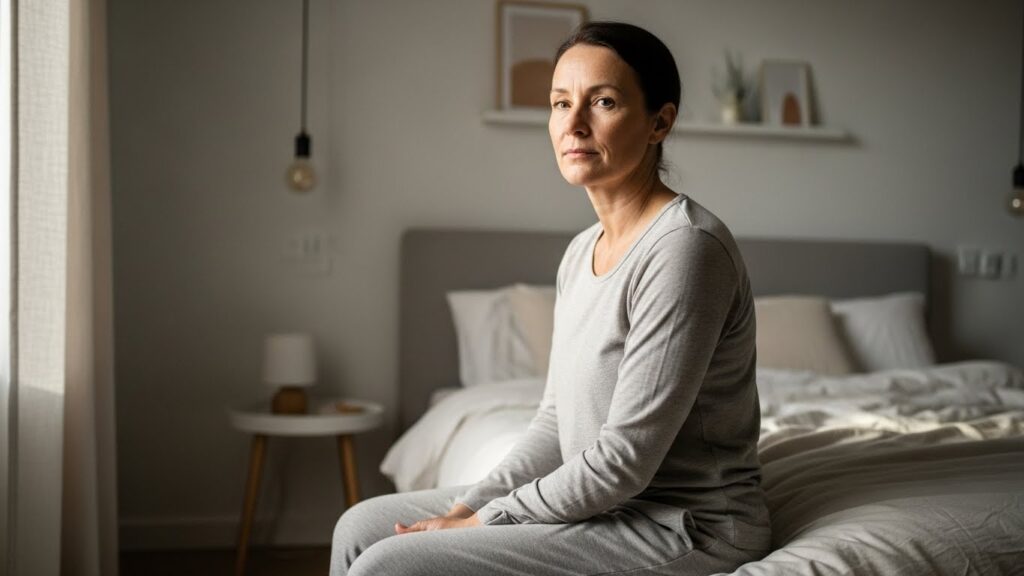
2) The 2-minute bucket test (tomorrow morning)
Don’t chase perfect. Don’t push into sharp pain. You’re just collecting clues so you can stop guessing and start adjusting the right lever.
Clue #1 — Does stability reduce stiffness fast?
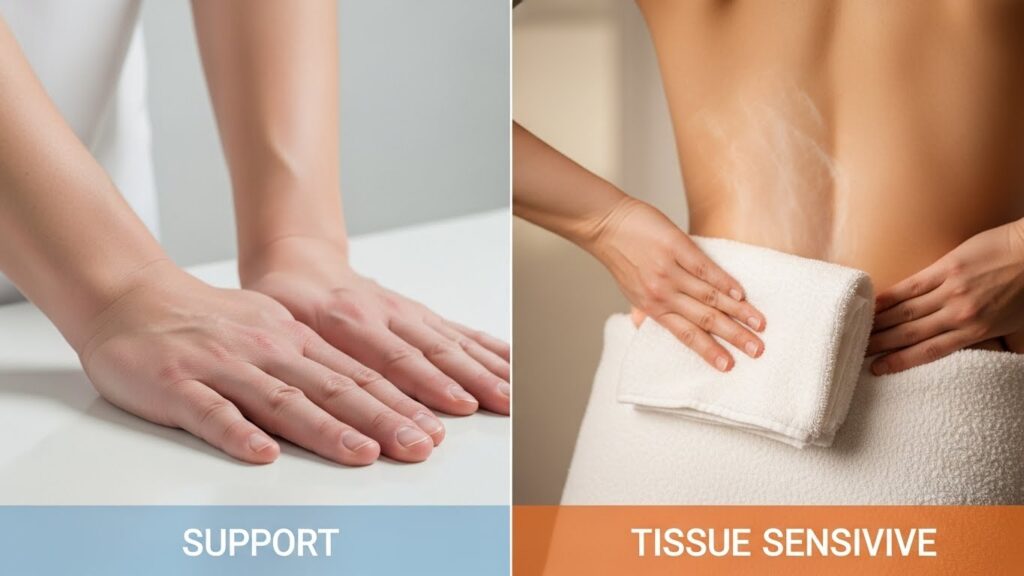
Stand near your bed. Lightly brace your hands on a counter or wall. Do 5 tiny hip hinges (10–15% bend). If this instantly feels safer and smoother, you likely have a support/stability piece (Bucket A).
Clue #2 — Does warmth change everything?
Try 60 seconds of warmth (shower water or a warm towel on low back/hips). If you feel a dramatic “melt,” that points toward tissue sensitivity + temperature (Bucket B).
3) The 8-minute “unlock” protocol (before socks, sink, sitting)
This sequence is built for real mornings: low effort, low risk, high payoff. The goal is to lower friction before you load the spine with bending, rushing, or long sitting.
Part 1 (3 minutes): Startup sequence
- 30 seconds: ankle pumps + 5 gentle glute squeezes (still in bed).
- 60 seconds: slow breathing (long exhale) + tiny pelvic tilts (easy range).
- 60 seconds: stand and do 5 mini hip hinges (10–15% bend), hands lightly supported.
- 30 seconds: “half-range rehearsal” of your trigger move (socks, sink bend, brushing teeth).
Part 2 (2 minutes): Warmth cue (optional, high value)
If you run cold, wake “scratchy,” or feel locked: do 60–120 seconds of warm shower water on low back/hips. Not “deep heat.” Just comfort. You’re telling your system it’s safe to move.
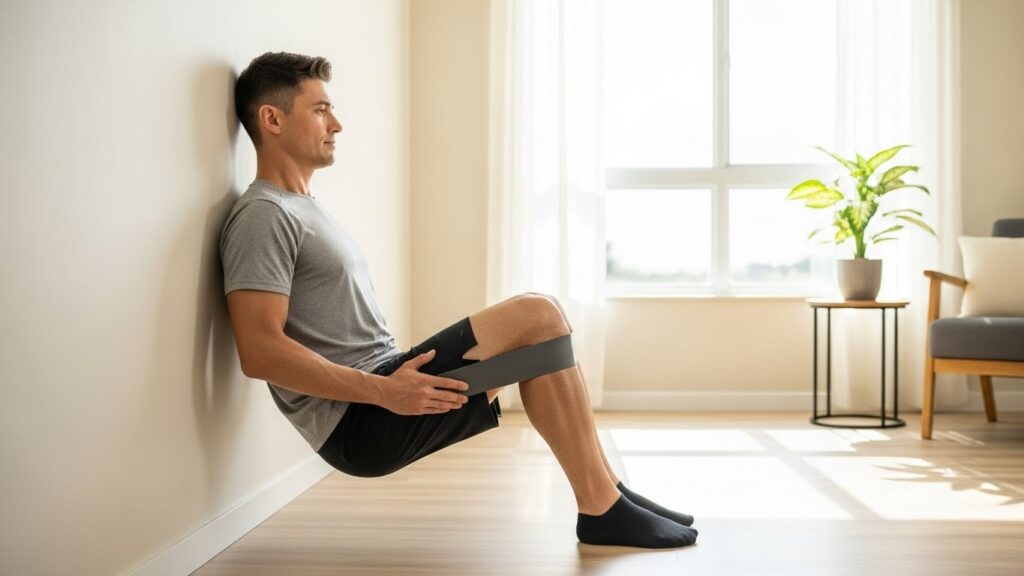
Part 3 (3 minutes, 3x/week): Strength anchors (the anti-stiffness insurance)
This is where Bucket A people level up fast. These are deliberately simple: small doses, consistent reps, controlled range.
- Wall sit (or supported mini squat): 20–30 seconds
- Hip hinge drill with hands on thighs: 8 slow reps
- Standing glute squeeze: 10 reps (2-second hold each)
Pro tip (this prevents backfires)
If your stiffness is support-driven, you’ll often feel better after stable reps (supported hinges, controlled squats), not after aggressive stretching. When your system is guarding, forcing range can trigger more protection.
4) Pattern map: which fix matches your morning?
| What you notice | More likely | Best first move |
|---|---|---|
| Feels better when supported (hands on counter, slower reps) | Support gap (Bucket A) | 3-minute strength anchors 3x/week + supported hinges |
| Feels better with warmth fast | Sensitivity/temperature (Bucket B) | Warm cue + micro-moves before bending |
| Worst after sitting right away | Early load sensitivity + posture | Delay sitting 5–10 minutes; do startup sequence first |
| Stiff + swollen + lasts > 60 minutes | Possible inflammatory pattern | Medical evaluation recommended |
These are pattern clues, not diagnoses. Use them to run safer experiments.
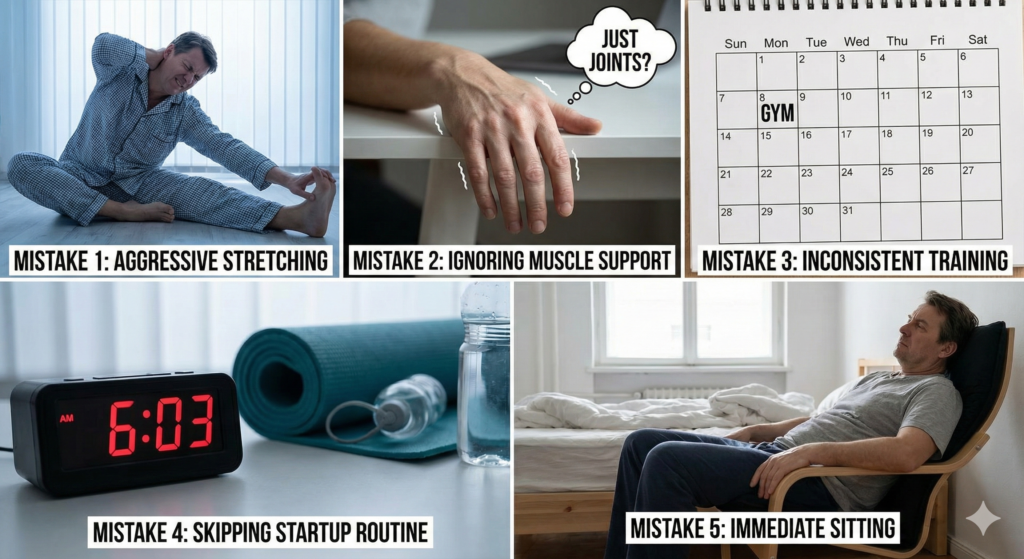
5) Common mistakes after 40 (that keep you stuck)
- Stretching hard as the first move: if your system is guarding, it can feel worse.
- Assuming it’s “only joints”: support can be the missing piece, especially if stability changes your symptoms fast.
- Training once a week: consistency matters more than intensity for stiffness patterns.
- Skipping the first 3 minutes: your morning startup is the highest-leverage moment of the day.
- Going from bed to chair: long sitting too early can make stiffness “set” for the next hour.
FAQ
Is this definitely sarcopenia?
Not necessarily. “Sarcopenia” is a clinical term. Here we’re talking about a common trend: many people lose strength with age unless they train it. The bucket test helps you choose safer first steps.
Should I lift heavy weights?
You don’t need “heavy” to benefit. Start with controlled, safe, consistent reps. If you want a tailored plan, a qualified professional can match it to your history and goals.
Why does stiffness improve once I move?
Movement increases circulation, warms tissues, stirs joint lubrication, and tells your nervous system it can stop bracing.
What if stiffness is only on one side?
That often suggests a repeating sleep load (same twist/side). Try one small sleep setup change for 7 nights and compare what happens.
When should I get checked?
If you have red flags, progressive symptoms, significant swelling, or stiffness lasting over an hour most mornings, get medical guidance.
Related BodyEase Lab posts
If your mornings follow a repeatable pattern, these connect the dots:
Stiff back in the morning: why it felt fine at night but tight after sleep
Morning stiffness improves after moving: what your body is doing
Slept 8 hours, still stiff: why your body felt tight anyway
Sleep position and morning stiffness: how the way you slept can load one side
Morning back pain routine: the 5-minute reset that helps most people
Sources
- National Institute on Aging: Exercise and physical activity
- MedlinePlus (NIH): Back pain overview
- MedlinePlus (NIH): Muscle weakness overview
- CDC: Physical activity basics
Professional disclaimer
This content is for educational purposes only and does not diagnose or treat medical conditions. If you have red flags (fever, significant swelling, new weakness/numbness, bowel/bladder changes, severe or worsening pain), seek professional care.
Update log
2026-01-17: Combined “support vs sensitivity” framework, added 2-minute bucket test, refined 8-minute unlock protocol, and expanded pattern map for safer self-experiments.

Hi, I’m Chris
I’m not a doctor or a physio. I’m just a guy who spent 5 years battling crippling morning back pain while sitting at a desk job.
Traditional advice didn’t work for me, so I became obsessed with researching the science of recovery. This blog contains the practical, tested routines that finally helped me wake up pain-free.