Last Updated: January 9, 2026 | Editorial Review: BodyEase Lab (Evidence-checked) | Note: Informational only (not medical advice)
Disclaimer: This content is for educational purposes only. It does not diagnose, treat, or replace professional medical care. If stiffness is severe, worsening, or paired with numbness/weakness, seek medical evaluation.
Quick Pattern Check (read this first)
- If you wake up stiff most mornings, sleep position morning stiffness is worth testing before blaming your mattress.
- Overnight posture = 6–9 hours of static loading (your body stays in one “shape” too long).
- Small supports (knees/hips/neck) can change how you feel within 2–3 nights.
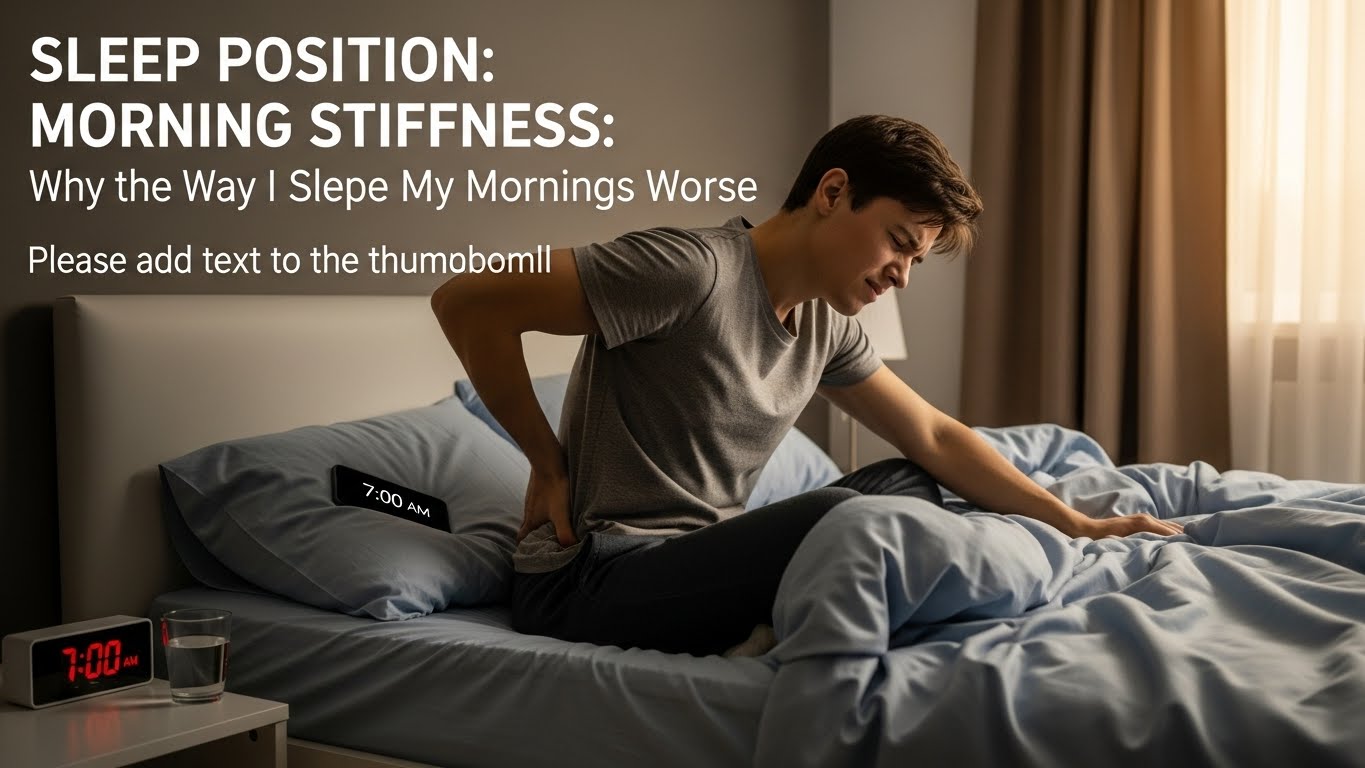
I used to assume morning stiffness meant bad sleep, stress, or “getting older.” But once my sleep schedule became consistent, one thing got weirdly obvious: some mornings I felt normal… and other mornings I felt tight before my feet hit the floor.
The variable that kept changing wasn’t the mattress. It was how I slept — especially leg position, hip twist, and how supported my spine felt overnight.
💡 Quick Summary
Sleep position morning stiffness often happens because your spine stays in prolonged flexion, extension, or rotation for hours. That static load can create temporary “tissue creep” (a slow stretch effect), plus higher disc hydration after sleep. The result is a protected, locked feeling until movement restores normal tolerance. The fastest fix is rarely “sleeping perfectly” — it’s adding simple supports that reduce twist/arch all night.
1) Why sleep position can make mornings stiff (even with “good sleep”)
Sleep restores the brain, but your musculoskeletal system pays a price: stillness. Unlike daytime posture, you don’t consciously correct alignment at night. If your hips twist, your low back arches, or your neck rotates for hours, your body adapts to that shape temporarily.
2) The biomechanics: static load, creep, and disc hydration
Static loading: your body “deforms” under gravity
During sleep, tissues don’t just rest — they slowly settle. Soft tissue held at end-range (twist/arch/curl) can trigger a protective morning response: you feel “stiff” because your nervous system doesn’t want you moving fast while tissues are vulnerable.
Tissue creep: the slow stretch effect
“Creep” is a simple idea: if you hold a position long enough, tissues lengthen slightly and lose their snap-back for a while. In real life, that can feel like: “I’m not injured, but I can’t move freely yet.”
Disc hydration: why mornings are mechanically different
After hours of unloading, spinal discs are often more hydrated than later in the day. That doesn’t mean damage — it means the spine can feel more sensitive to twisting, bending, and arching right after waking.
One-line evidence anchor: Clinical guidance and biomechanics research note that sleep posture and time-of-day mechanics influence how the spine tolerates load, which helps explain why symptoms can feel strongly “morning-linked.”
3) The 3 common sleep patterns that quietly cause stiffness
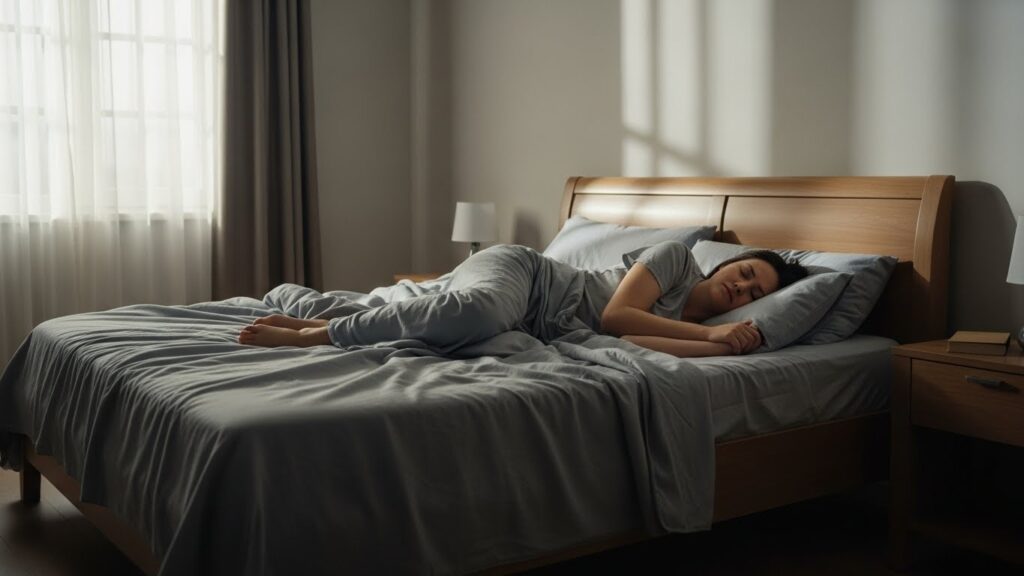
Pattern A: Side sleeping without knee support (the “hip twist”)
If your top leg falls forward, it can rotate the pelvis. That twist often shows up as one-sided low-back tightness, QL tension, or a “stuck” feeling when you stand up.
Pattern B: Back sleeping with an exaggerated arch (the “low-back hinge”)
Flat back sleeping can increase lumbar arching for some people, especially if hips are tight. The morning clue is often: you feel stiff trying to stand tall, and the first forward bend feels harsh.
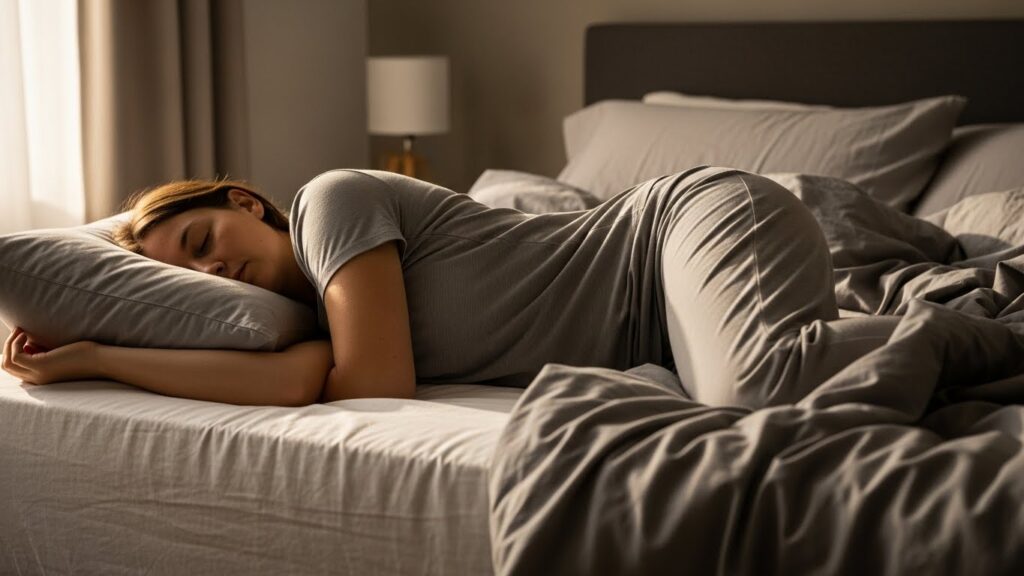
Pattern C: Stomach sleeping (the “neck + low-back torque”)
This position often forces the neck into rotation and the low back into extension. Many people don’t feel it at night — they feel it the next morning.
4) The Neutral Spine Blueprint (simple supports for every style)
The goal is not perfection. It’s neutral alignment — supported curves, less twist, less end-range stress. Think of it as reducing the “overnight load bill,” not forcing your body into a new personality.
| Sleep Position | The Fix (support) | Biomechanical Goal |
|---|---|---|
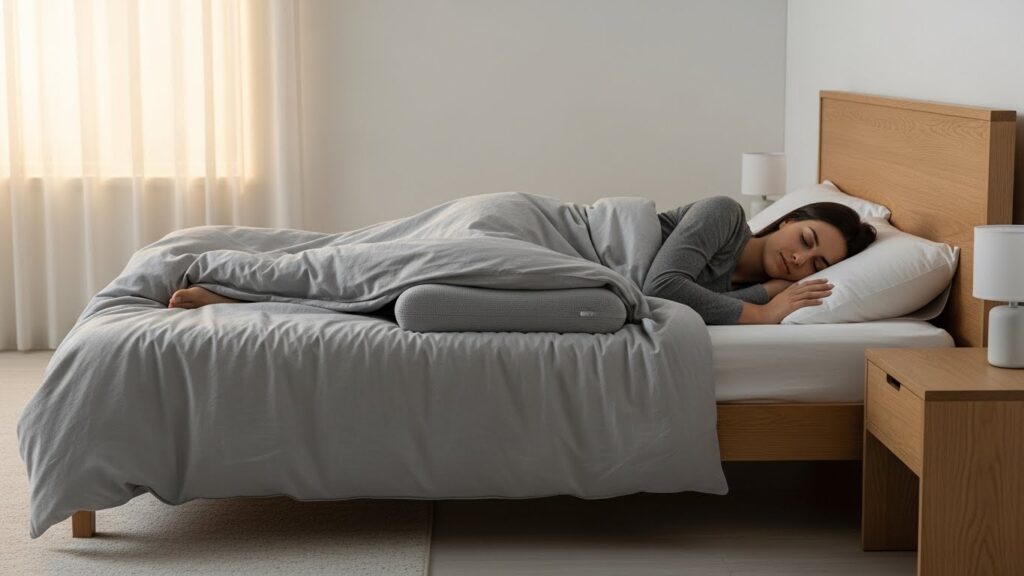
| Side sleeper | Pillow between knees/ankles (thicker than you think) | Keep hips stacked; reduce pelvic torsion and asymmetry. |
| Back sleeper | Small bolster under knees | Reduce excessive lumbar arching; keep spine neutral. |
| Stomach sleeper | Thin pillow under pelvis + reduce neck rotation | Limit extension torque; reduce neck and low-back strain. |
5) The 3-night test (so you stop guessing)
If you want to actually prove whether sleep position morning stiffness is your driver, do this short experiment. It’s intentionally boring — boring works.
Track these 3 signals (each morning):
- Time-to-loosen: How many minutes until you feel “normal”?
- First bend reaction: Does the first forward bend feel sharp, stiff, or fine?
- One-sidedness: Is stiffness worse on one side (hip/QL/low back)?
Night 1–3 rule: keep your routine the same, but add only one support change (knees for back sleepers, knees/ankles for side sleepers). If stiffness improves even 20–30%, you’ve identified a mechanical contributor — not a mystery.
If you move a lot at night
You don’t need to stay “perfect” all night. Even if supported alignment only holds for part of the night, you’re still reducing cumulative load — and mornings often respond to that partial improvement.
6) Do you need a new mattress, or just support?
A lot of “mattress problems” are actually support problems. Before changing anything major, test pillow supports for a few nights. If your stiffness pattern doesn’t budge at all, then consider whether your surface is too soft (sinking twist) or too firm (pressure points forcing awkward posture).
7) Red flags (don’t ignore these)
- New or worsening leg weakness, or difficulty walking normally
- Numbness in the groin/saddle area
- Loss of bladder/bowel control
- Severe radiating pain that escalates or doesn’t settle with gentle movement
FAQ
Is there one best sleep position for everyone?
No. The best position is the one that keeps you closest to neutral and gives you the easiest mornings.
Should I force myself to sleep on my back?
Usually no. Forced posture can create new tension. Support your current style first.
How fast can changes help?
Many people notice a difference within 2–3 nights, especially when pelvic twist is the main driver.
Why does fixing my legs sometimes make my neck feel weird?
The spine is a chain. If hips shift, head position can change. Match pillow height to your shoulder width (side sleeping) to keep alignment consistent.
Internal Links
Back Hurts After Waking Up: Why Pain Peaks Right After Getting Out of Bed
Bending Over in the Morning Hurts: Why This Simple Movement Feels Bad After Sleep
Morning Back Stiffness: What Finally Helped My Body Feel Looser After Waking Up
Sources (checked)
Sleep Foundation: What is the best sleeping position?
Cleveland Clinic: Best sleeping positions for pain
PubMed: Diurnal changes in spinal mechanics (time-of-day effects)
Professional Disclaimer: Educational content only. Not medical advice. If symptoms are severe, persistent, progressive, or concerning, consult a licensed clinician.
Update Log:
– Jan 9, 2026: Merged biomechanical explanation (static load + tissue creep) with practical sleep-support blueprint and 3-night self-test.

Hi, I’m Chris
I’m not a doctor or a physio. I’m just a guy who spent 5 years battling crippling morning back pain while sitting at a desk job.
Traditional advice didn’t work for me, so I became obsessed with researching the science of recovery. This blog contains the practical, tested routines that finally helped me wake up pain-free.